Notice: This article was created with AI.
What’s It About?
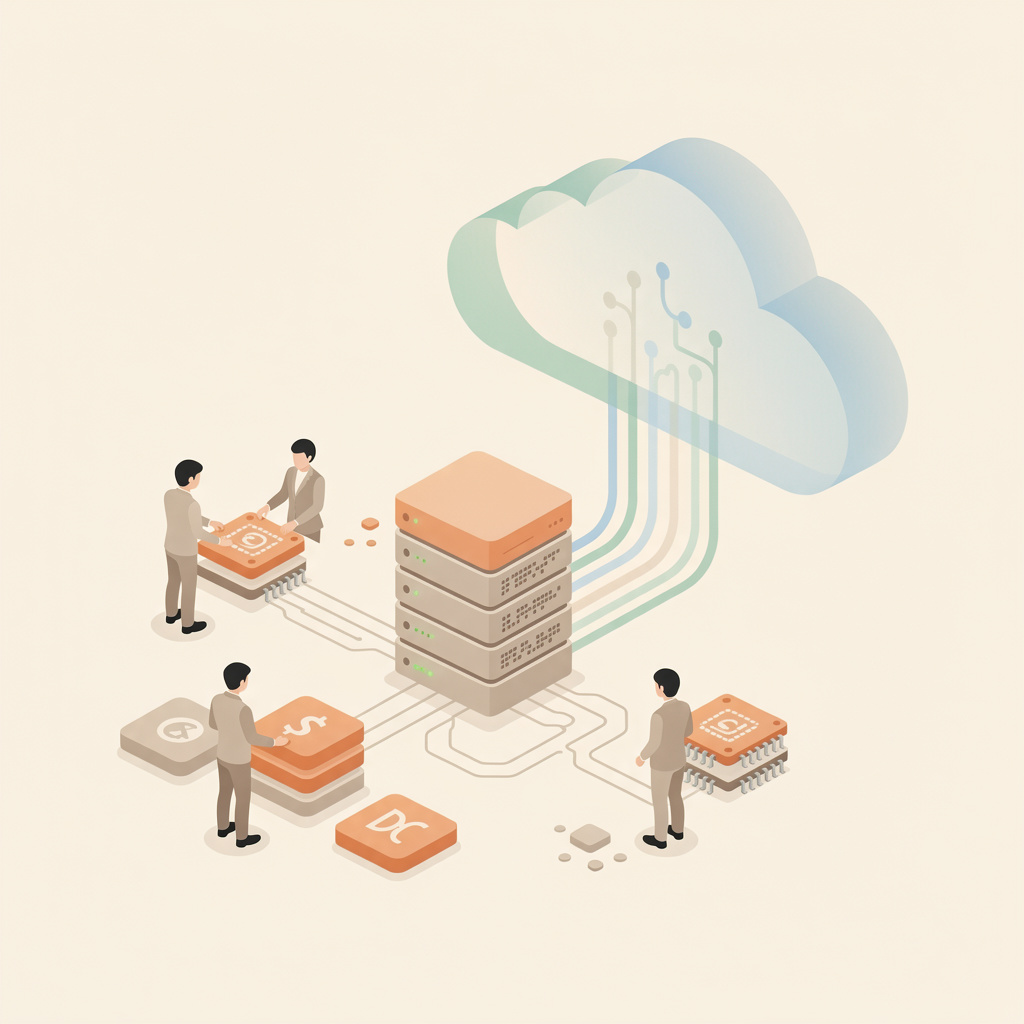
Local AI is ready for everyday use — not just for tech enthusiasts, but as a practical tool for businesses. Many tasks can now be handled directly on your own hardware, without relying on external providers. The main drivers behind this shift: exploding cloud costs and growing data privacy concerns.
Graphics cards from NVIDIA and AMD are at the heart of local AI setups. Models like LLaMA, Mistral, or Phi can run on consumer hardware — provided the GPU has enough VRAM to handle the workload.
Background & Context
The hardware requirements for local AI are considerable. Graphics cards with high compute power are the heart of such systems. For demanding AI models, GPUs with at least 32 GB of graphics memory are recommended. NVIDIA RTX models and AMD Radeon cards are considered particularly suitable for these tasks.
Tools like LM Studio, Ollama, or LocalAI handle the technical complexity. They provide interfaces to run local models without deep programming knowledge, making local AI accessible to a much broader audience than ever before.
The benefits of running AI locally go beyond cost savings: data stays in-house, performance is predictable, and there is no dependency on external API availability. These are compelling arguments — especially for businesses dealing with sensitive information.
What Does This Mean?
- Rethink cost calculations: Local hardware may require higher upfront investment, but can pay off within months compared to ongoing cloud subscription fees.
- Privacy as a selling point: Keeping data processing on-site eliminates the risk of sensitive information being processed externally — a strong argument for regulated industries.
- Technical barriers are dropping: Tools like LM Studio make local AI accessible even without programming expertise, lowering the entry threshold significantly.
- Plan your hardware investment: Powerful GPUs with sufficient memory are the critical factor – this is not the place to cut it too fine.
- Hybrid approaches are possible: Simple tasks locally, complex tasks in the cloud — a hybrid strategy can be the most cost-effective and flexible solution.
Sources
- Cloud costs exploding? You can also run AI locally – here’s the hardware you need (t3n)
- Local AI models are now usable – and this is the hardware they run on (heise.de)
- AI hardware in transition: how to do it without the cloud (digital-engineering-magazin.de)
- How to use AI locally and securely (kaspersky.de)
This article was created with AI assistance and reviewed by the editorial team.
Further Reading: GPTs, Skills, Plugins, Agents – Who Offers What, and What’s Actually Worth It?