Notice: This article was created with AI.
What’s it about?
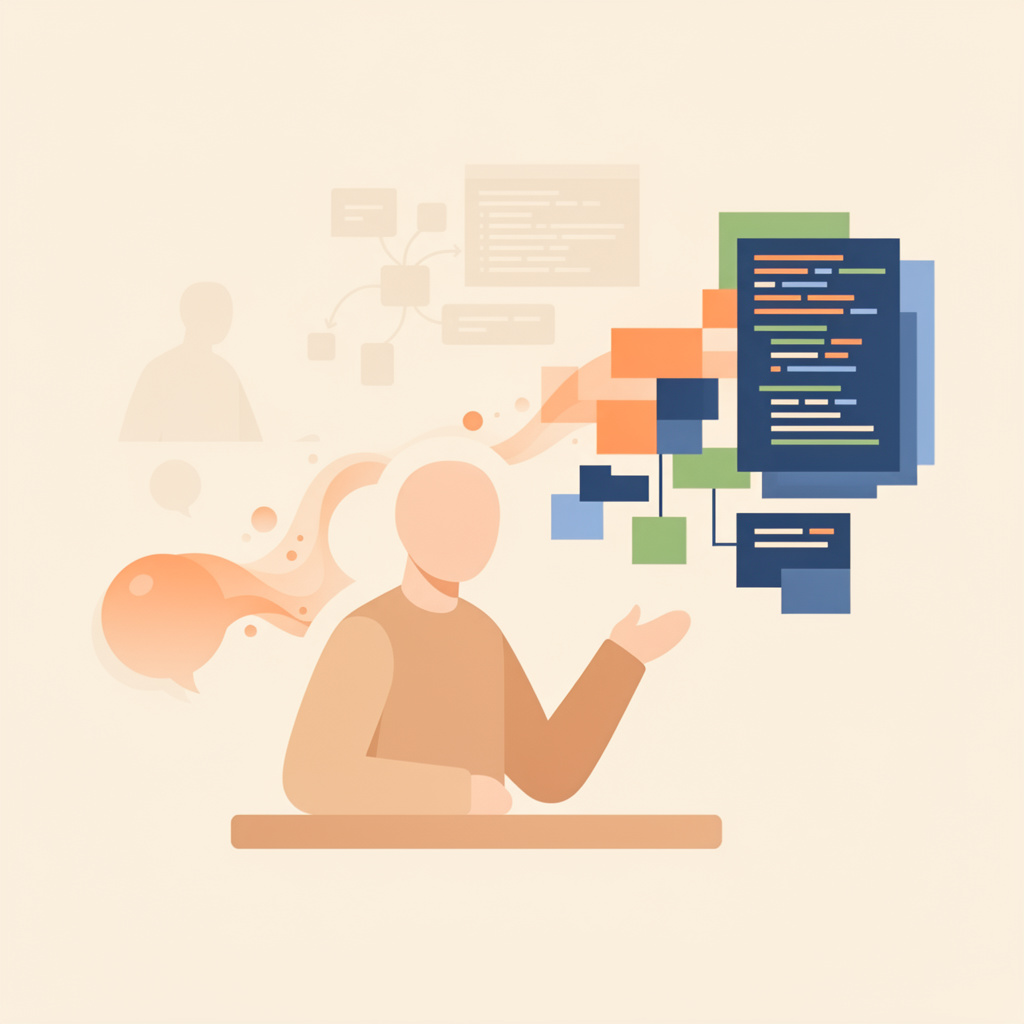
A new working style is establishing itself in software development: Vibe Coding describes the practice where developers no longer primarily write code themselves, but instead articulate their requirements in natural language and let AI tools handle the implementation. Rather than wrestling with syntax details, programmers focus on communicating their ideas and directing the creative process. While this paradigm shift significantly accelerates development, it also raises questions about code quality, security, and the evolving role of developers.
Background & Context
The term was popularized in early 2025 by AI expert Andrej Karpathy and describes a fundamental shift in the development process. While traditional programming required deep technical understanding and manual coding, tools like GitHub Copilot, Cursor, and Replit now enable rapid functionality generation through dialogue with artificial intelligence. Developers become intermediaries between business requirements and machine execution.
This approach fosters agile, iterative processes: prototypes emerge in minutes rather than days, and adjustments can be made immediately. Different AI tools offer varying emphases – from simple prototyping environments to mature development environments with comprehensive code support. The technology promises particularly significant productivity gains for routine tasks, boilerplate code, and standard implementations.
However, responsibility shifts accordingly: developers must be able to understand, review, and adapt AI-generated code. Experts warn of technical debt, security vulnerabilities, and increased debugging effort when developers fail to thoroughly grasp the automatically generated code. The role evolves from pure coding toward design, architecture, and quality assurance – which, paradoxically, may require deeper technical competence than before.
What does this mean?
- New skills in demand: Developers increasingly need capabilities in communication, requirements analysis, and code review, while pure programming skills lose relative importance.
- Quality assurance becomes more critical: Without robust governance processes and thorough review mechanisms, AI-generated solutions can lead to maintenance problems and security risks.
- Democratization with limits: While software development becomes more accessible, deep technical understanding remains essential for production-ready systems.
- Processes must adapt: Teams should develop clear guidelines for AI usage and define when human expertise is absolutely required.
- Productivity potential when applied correctly: For suitable tasks such as prototyping, standard functions, or exploratory development, Vibe Coding can significantly increase speed.
Sources
Vibe Coding Explained (Computerwoche)
Vibe Coding: How AI Is Changing the Rules of Software Development (Golem Karrierewelt)
Vibe Coding: Definition, Potentials, Risks (Fraunhofer IESE)
The Vibe Coding Dilemma: Why AI-Generated Code Alone Is Not a Solution (Ströer Digital)
Where Vibe Coding Helps and Where It Doesn’t: A Practical Report (Codecentric)
This article was created with AI assistance and is based on the cited sources as well as the language model’s training data.
Further Reading: GPTs, Skills, Plugins, Agents – Who Offers What, and What’s Actually Worth It?