Notice: This article was created with AI.
What’s It About?
At its customer conference Knowledge 26, ServiceNow unveiled far-reaching expansions to its workflow platform. At the center is its positioning as a central control unit for AI-based transformation in enterprises. CEO Bill McDermott emphasizes that the strategic use of artificial intelligence will be decisive for economic growth in the future — especially given the emerging skills shortage. The expanded platform is designed to help companies systematically control their AI landscape and transform uncoordinated individual solutions into ordered structures.
Background & Context
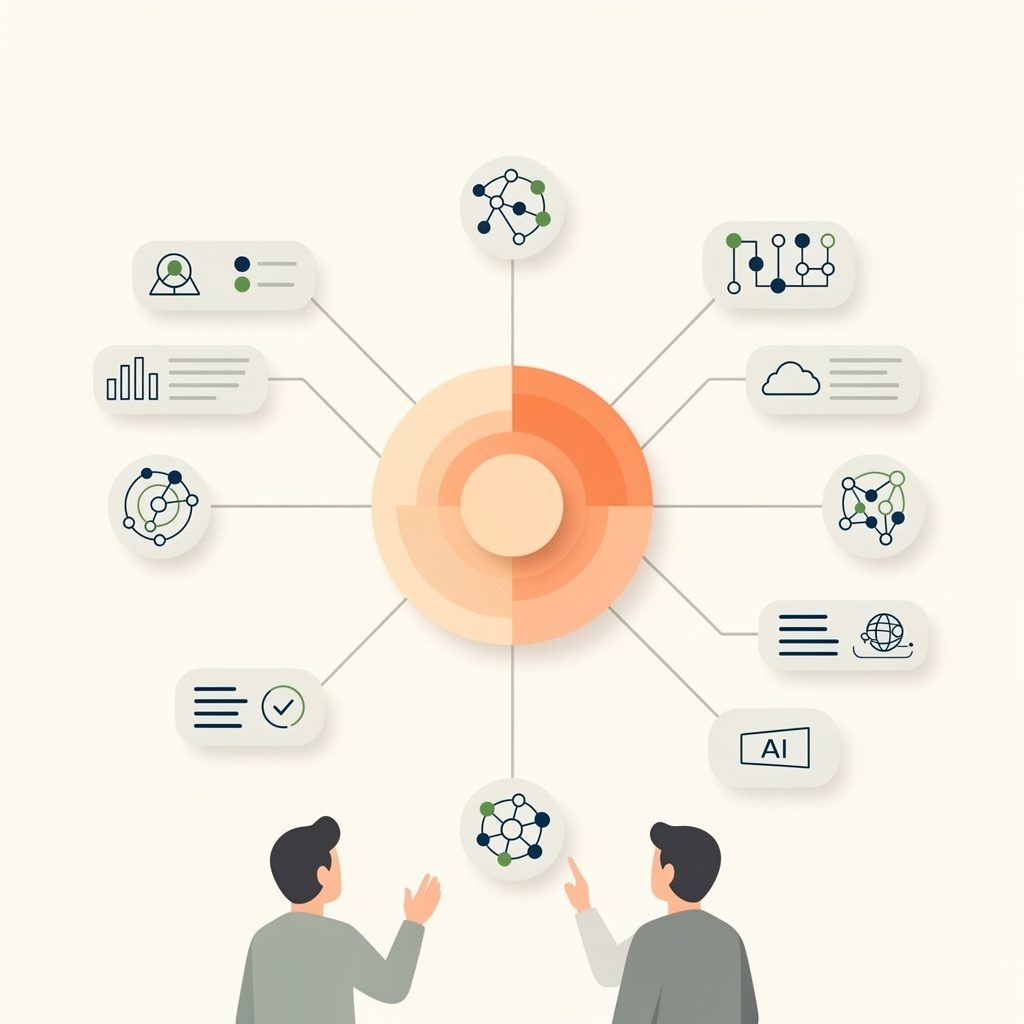
At the core of the announcements is the so-called AI Control Tower — a central control instance for governance, monitoring, and integration of various AI agents. The platform makes it possible to unify different systems and processes, integrating leading cloud providers such as Microsoft Azure, Amazon Web Services, and Google Cloud. Through the Model Context Protocol, the platform is opened to any AI agent, regardless of whether it was developed internally or externally.
ServiceNow is also expanding its portfolio of AI agents, which are designed to work alongside human employees in areas such as customer relationship management, IT services, and human resources. Otto was introduced as a comprehensive AI assistant that recognizes user intentions, delegates tasks, and supports employees across departments — without requiring in-depth technical knowledge of the underlying systems. The acquisition of Traceloop additionally enables real-time analysis of AI agent behavior for performance optimization. In addition, five new compliance frameworks were introduced, aligned with international standards such as NIST and the EU AI Act.
What Does This Mean?
- With the AI Control Tower, companies gain a central instance for the coordinated management of their increasingly complex AI landscapes — an important step toward preventing shadow IT in the AI domain.
- The opening via the Model Context Protocol creates a vendor-independent ecosystem that facilitates the integration of diverse AI solutions and reduces vendor lock-in.
- The new compliance frameworks address growing regulatory requirements and can help companies minimize legal risks when dealing with AI systems.
- Through integration with leading cloud platforms, ServiceNow positions itself as an orchestration layer for hybrid AI infrastructures in large enterprises.
- The combination of autonomous agents and human labor could accelerate the transition to assisted work models, where routine tasks are increasingly automated.
Sources
- ServiceNow Drives AI Transformation with Integrated Platform (Computerwoche)
- ServiceNow Continues Its AI Transformation with an Integrated Experience (CIO)
- ServiceNow Knowledge 2026: What to Expect as AI Agents Take Center Stage (BizTech Magazine)
- ServiceNow Expands AI Agent Governance through Deeper Integration with Microsoft (ServiceNow Newsroom)
This article was created with AI assistance and is based on the cited sources and the language model’s training data.
Further Reading: From Text Generator to Digital Employee: How AI Is Changing the World in Four Stages