Notice: This article was created with AI.
What’s It About?
The move away from classic passwords toward certificate-based authentication methods is gaining importance in IT security. Public Key Infrastructure (PKI) enables organizations to fundamentally modernize their access systems: instead of vulnerable passwords, digital certificates based on asymmetric encryption are used. This technology promises not only increased security against common attack scenarios but also simplified administrative processes for IT departments.Background & Context
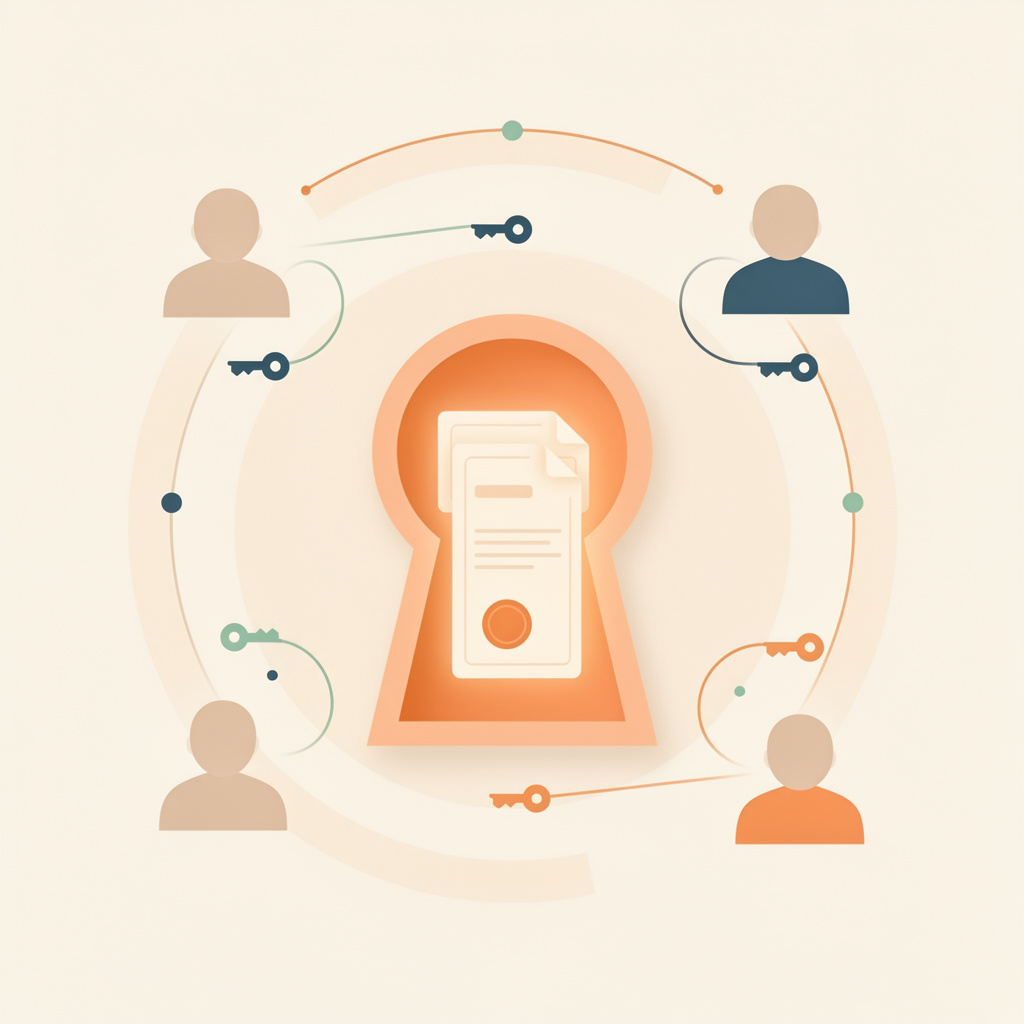
With PKI-based authentication, a key pair is generated for each user: a private key that remains securely with the user, and a public key for verification. A trusted certification authority issues digital certificates that serve as proof of identity. This approach eliminates typical weaknesses of conventional passwords such as phishing susceptibility, brute-force attacks, or forgotten credentials. Integration into existing IT infrastructures is usually straightforward. VPN access, internal applications, and cloud services can be connected to the PKI system. Modern solutions offer automated lifecycle management: certificates are renewed without manual effort or revoked in the event of security incidents. Self-service portals reduce the burden on IT support by allowing users to carry out certain administrative tasks independently. For future threat scenarios, systems should be designed to be crypto-agile – that is, capable of integrating new encryption methods when established standards lose security.What Does This Mean?
- Security gain: The elimination of password weaknesses considerably minimizes attack surfaces and provides better protection against identity theft
- Efficiency increase: Automated certificate management relieves IT teams and speeds up authentication processes in everyday work
- Compliance advantages: PKI systems make it easier to meet regulatory requirements through traceable access controls and audit capability
- Future-proofing: Crypto-agile architectures enable timely adjustments to changing threat situations and technological developments
- User acceptance: Simplified login processes without having to memorize passwords increase satisfaction and reduce support requests
Sources
Passwortfreie Authentifizierung: So gelingt der Umstieg auf PKI (Computerwoche) CSO Online: Passwortfreie Authentifizierung HID Global Blog: When PKI Excels in Passwordless Authentication Heise Business Services: Microsoft schafft das Passwort ab Pointsharp: User Authentication Smallstep Blog: Everything PKI IT-Administrator: Anforderungen von NIS2 und DORA Prosoft: Sichere Authentifizierung mit Hardware-Token Ping Identity: Token-basierte Authentifizierung SentinelOne: What is Passwordless Authentication Nexus Group: Was ist eine PKI This article was created with AI assistance and is based on the listed sources as well as the language model’s training data.Further Reading: When the Second Brain Talks Back