Notice: This article was created with AI.
What’s It About?
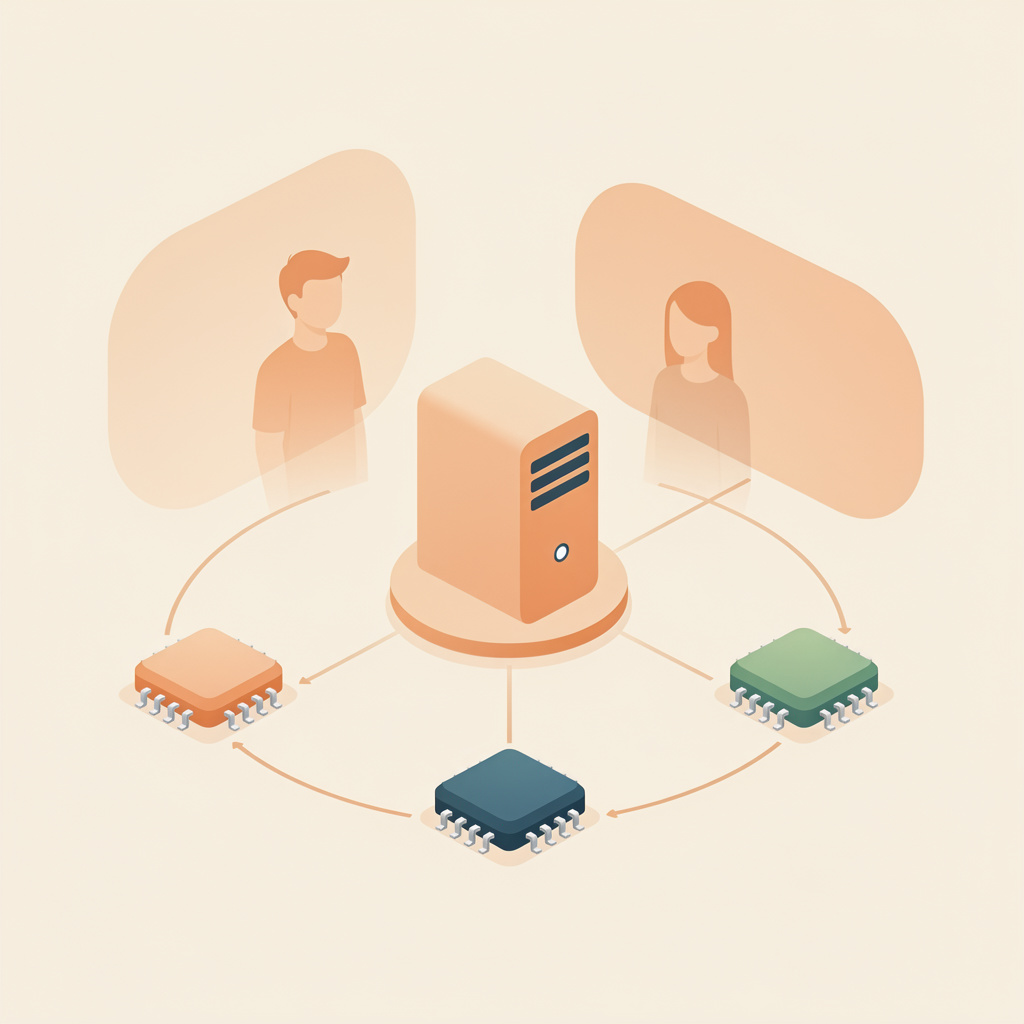
Anyone who wants to use large language models without having to rely on cloud services now has several options. A current overview shows various approaches for running LLMs directly on one’s own computer. The advantage: sensitive information does not leave one’s own system, and users retain full control over their data. In addition, this also makes it possible to test specialized models that have been optimized for specific use cases.
Background & Context
The hardware requirements for local LLMs have now become more manageable. Tests show that language models can run on different systems – from Windows computers with modern processors to Apple devices with M1 chips. This development considerably lowers the barriers to entry and makes the technology accessible to a broader group of users.
Various tools have become established for local execution. While some, such as GPT4All, come with a graphical user interface for chat applications, others, such as LLM, rely on command-line interfaces that require programming knowledge. Further options such as Ollama or h2oGPT expand the spectrum with different feature sets. The choice of model plays a central role, as different LLMs have different performance characteristics and resource requirements. Some models, such as Meta’s Llama-2 or SeamlessM4T, open up specific application scenarios for research and professional use.
For companies, the data protection aspect is particularly relevant. Local operation prevents confidential information from being transmitted to external servers – a key advantage over cloud-based solutions, especially in the context of the GDPR. Many tools also offer interfaces to programming languages such as Python or Node.js, which enables individual customizations and integration into existing systems.
What Does This Mean?
- Data protection: Local LLMs enable the processing of sensitive data without external server transmission, which eases compliance requirements.
- Accessibility: The reduced hardware requirements make AI technology usable even for smaller organizations and individuals.
- Flexibility: The choice of various models and tools allows specialized use cases beyond standardized cloud offerings.
- Technical variety: From graphical interfaces to API-based solutions, different approaches are available for various competence levels.
- Experimentation field: Local systems are ideal for practically exploring the limits and possibilities of LLM technology.
Sources
Large-Language-Model-Tutorial: 5 Wege, LLMs lokal auszuführen (Computerwoche)
Open Source Large Language Models selbst betreiben (Fraunhofer IESE)
KI nutzen ohne DSGVO-Panik: Ein Leitfaden für deutsche Unternehmen (findskill.ai)
Getting Started with Local LLMs (APXML)
This article was created with AI assistance and is based on the listed sources as well as the language model’s training data.
Further Reading: GPTs, Skills, Plugins, Agents – Who Offers What, and What’s Actually Worth It?