Notice: This article was created with AI.
What’s It About?
The majority of knowledge workers now use AI tools in their everyday professional lives, yet only a small proportion truly exploit their possibilities. Research has now identified four central behaviors that distinguish successful AI users from occasional users. These routines can be learned and can measurably increase productivity.
Background & Context
The use of artificial intelligence in companies has increased considerably in recent months. Tools for automated text processing and workflow optimization are already standard in many industries. Nevertheless, a considerable gap is evident between mere use and effective deployment of the technology.
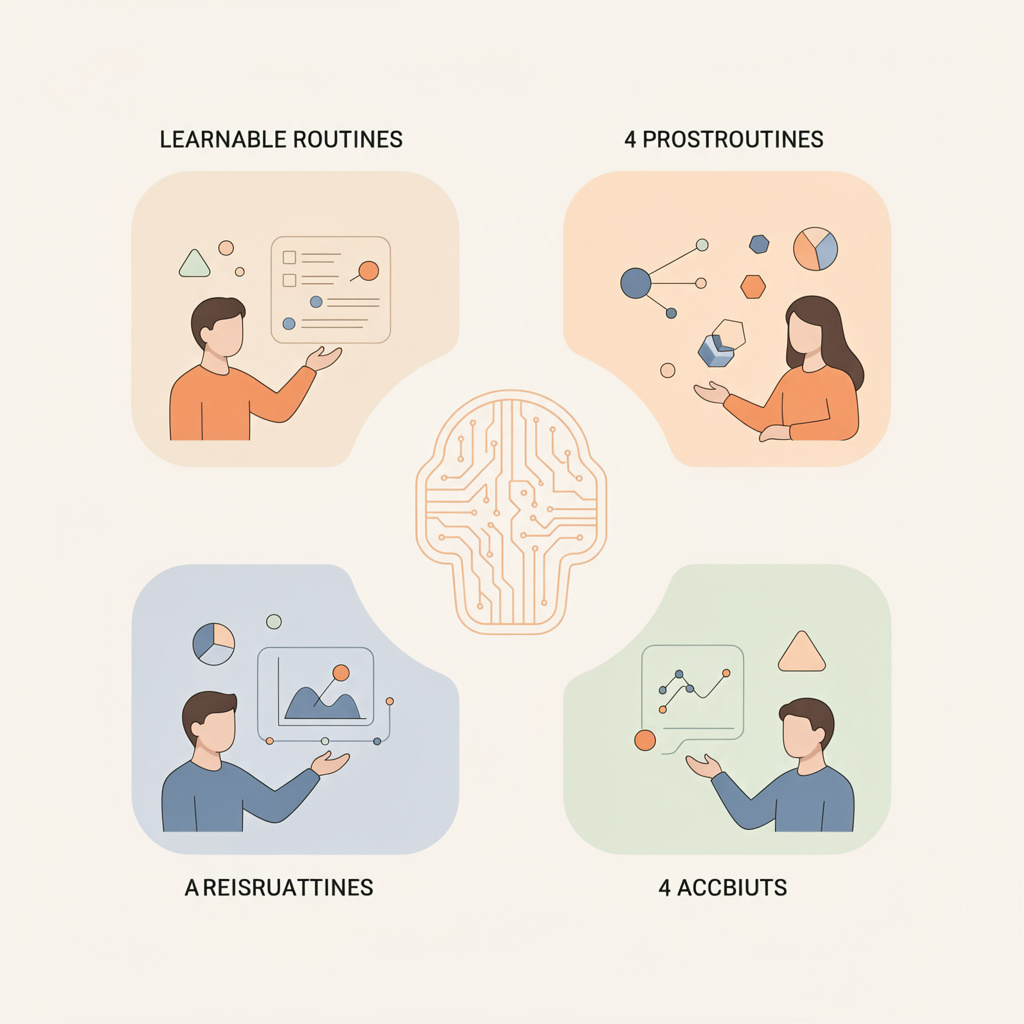
The four identified routines comprise a systematic approach to usage, creative problem-solving through experimental application, the development of effective workflows, and regular reflection on one’s own use of AI. While many employees use AI only sporadically for individual tasks, professionals succeed in integrating the technology as a lasting productivity aid. The research shows that this difference lies less in prior technical knowledge than in deliberate habit formation.
Another success factor is a creative approach to the tools: spontaneous innovations and unconventional use cases frequently emerge through experimental trial and error. Exchange within the team also plays an important role – a feedback culture and the sharing of experiences considerably accelerate the learning process.
What Does This Mean?
- Training needs: Companies should invest specifically in further education in order to empower employees beyond mere basic knowledge and to convey the four routines.
- Systematic approach instead of chance: The transition from occasional to professional AI use requires deliberate habit formation and regular reflection on one’s own work processes.
- Foster creativity: Organizations benefit from creating space for experimentation and supporting the exchange of successful use cases.
- Measurable effects: The consistent application of the defined practices demonstrably leads to productivity gains that show up in shorter processing times and more innovative solution approaches.
Sources
KPMG-Studie: Was KI-Profis wie Nick Hallman besser machen (FAZ)
Künstliche Intelligenz: Mitarbeitende als Schlüssel zur erfolgreichen KI-Nutzung (manager-magazin.de)
Wie lernen wir mit KI erfolgreich? Tipps für die Praxis (unisg.ch)
KI-Produktivität steigern: 3 Gewohnheiten für deinen Arbeitsalltag (go-ai-smart.com)
This article was created with AI assistance and is based on the listed sources as well as the language model’s training data.
Further Reading: GPTs, Skills, Plugins, Agents – Who Offers What, and What’s Actually Worth It?