Shadow AI: How Companies Can Secure Their Data Flows
Shadow AI – employees using unauthorized AI tools – risks leaking sensitive data into external models. Zero-trust access, data classification, training, and clear policies help secure data flows.
Concise AI news on new models, tools, companies, research findings and important developments shaping the industry. Each article explains what happened, why the news matters and what it can mean in practice for users, businesses and society.

Shadow AI – employees using unauthorized AI tools – risks leaking sensitive data into external models. Zero-trust access, data classification, training, and clear policies help secure data flows.

Microsoft Copilot brings AI into Word, Excel, and Outlook, letting users automate reports, data analyses, and email via natural language while staying within Microsoft 365 security standards.

Mercedes-Benz scales AI across its business with the self-hosted low-code platform n8n, empowering employees as takers, makers, and builders to create automated workflows themselves.

Instead of months-long ERP rollouts, mid-sized companies use AI and low-code tools like n8n or Make.com to automate individual processes within weeks, cutting time and cost.

Detection engineering is a proactive IT-security approach that builds custom detection rules using software-development principles like CI/CD to cut false alarms and counter evolving threats.
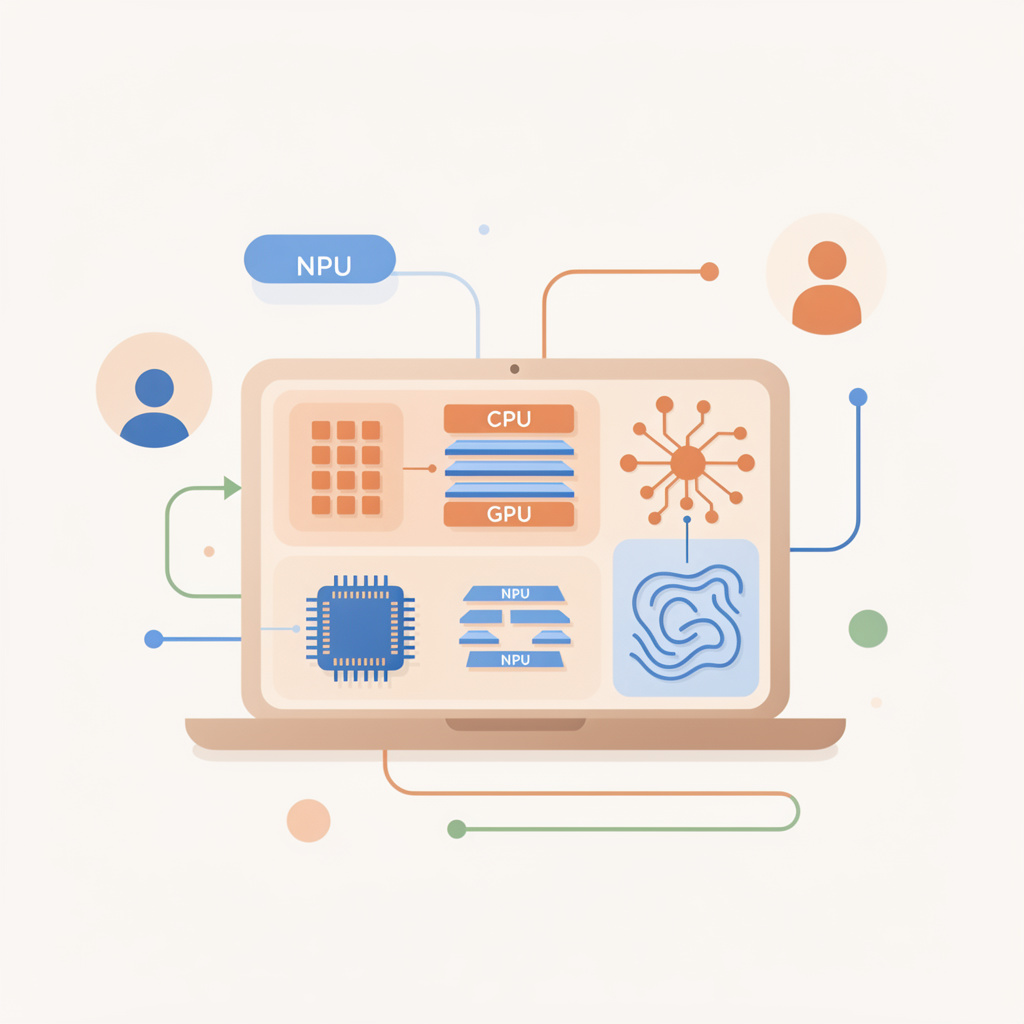
In AI PCs, the CPU, GPU, and the new NPU divide the work: the NPU handles AI inference on-device with high energy efficiency, meeting Microsoft’s 40-TOPS Copilot+ requirement.

Microsoft Copilot integrates AI into Word, Excel, PowerPoint, Outlook, and Teams to automate office tasks, though its usefulness varies by use case and user experiences are mixed.

A new SAP study finds companies investing heavily in AI with rising ROI expectations, yet governance lags: only four percent feel fully ready to deploy autonomous AI agents.

AI recruiting tools pre-select applications by keywords, structure, and formal criteria. Experts advise tailoring applications to these machine filters without sacrificing authenticity.

From pre-trained models and parameter-efficient fine-tuning to gradient checkpointing, pruning, and quantization, various strategies make training AI models considerably more cost-effective.