Notice: This article was created with AI.
What’s It About?
Barmer does not want to treat artificial intelligence as a side issue but to build it up as a core competence of the health insurer. That emerges from a report by Computerwoche. The background is demographic change, which is leading to an older community of insured members, and the shortage of skilled workers in healthcare. With more automation, service quality is nonetheless meant to stay high.
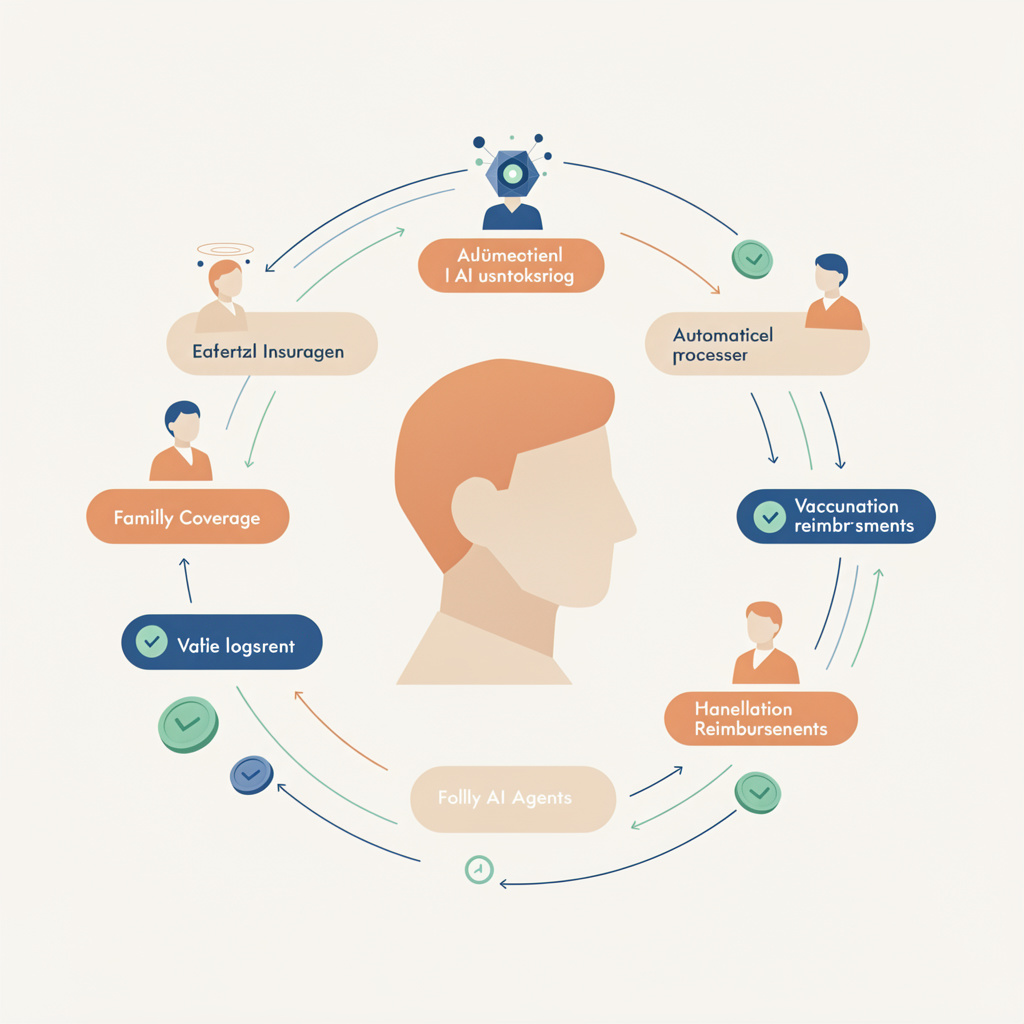
Central to this, according to Computerwoche, is the BARMER.KI department, which was founded in 2025. It develops AI applications together with business units, product owners and data scientists. The report names A³ as the flagship project. Using agentic AI, it is meant to automate labor-intensive procedures such as exemption from co-payments, family insurance and the reimbursement of vaccination costs, and to relieve staff noticeably.
Background & Context
Technically, according to Computerwoche, the project rests on a data and AI platform based on AWS. It is meant to make social data usable for intelligent services in close to real time. According to the report, several heavily manual core processes have been undergoing automation since the beginning of 2026. That is meant to shorten processing times considerably, and to do so for 8.3 million insured members (figure from Computerwoche).
On the scale of the work, Computerwoche gives further figures. The BARMER.KI team comprises 91 specialists, it says. It has 23 AI and generative AI solutions in production or in implementation, including chatbots and machine learning applications for invoice checking. The report also points to an operating model in which BARMER.KI and the IT department work closely together. The source was only available to me incompletely at this point, which is why further details on it cannot be reproduced reliably. All information comes from the reporting and has not been independently verified.
What Does This Mean?
- For Barmer, according to Computerwoche, AI is a strategic task with an organizational unit of its own, not a single pilot project.
- Agentic AI is meant above all to take over recurring, highly manual administrative procedures and thereby relieve staff.
- Whether the hoped-for efficiency gains and shorter processing times will materialize permanently cannot be conclusively assessed on the basis of the available reports.
- For other health insurers and public administrations, the example shows that a data platform, interdisciplinary teams and process automation are closely connected.
Sources
So baut die Barmer die Krankenkasse der Zukunft (Computerwoche)
So baut die Barmer die Krankenkasse der Zukunft (cio.de)
LinkedIn-Beitrag von Carsten Stahlschmidt zum Thema CIO des Jahres (de.linkedin.com)
This article was created with AI and is based on the listed sources as well as the language model’s training data.
Further Reading: Paperclip: When AI Agents Get an Org Chart