Notice: This article was created with AI.
What’s It About?
In a piece reproduced by Computerwoche, the Gartner analyst Annette Zimmermann assesses the state of agentic AI. Companies are accordingly trying out AI agents more and more in order to streamline administrative processes and automate more demanding tasks. At the same time she names obstacles: high costs, clean access management and the question of how the software industry adjusts to the new approaches.
Background & Context
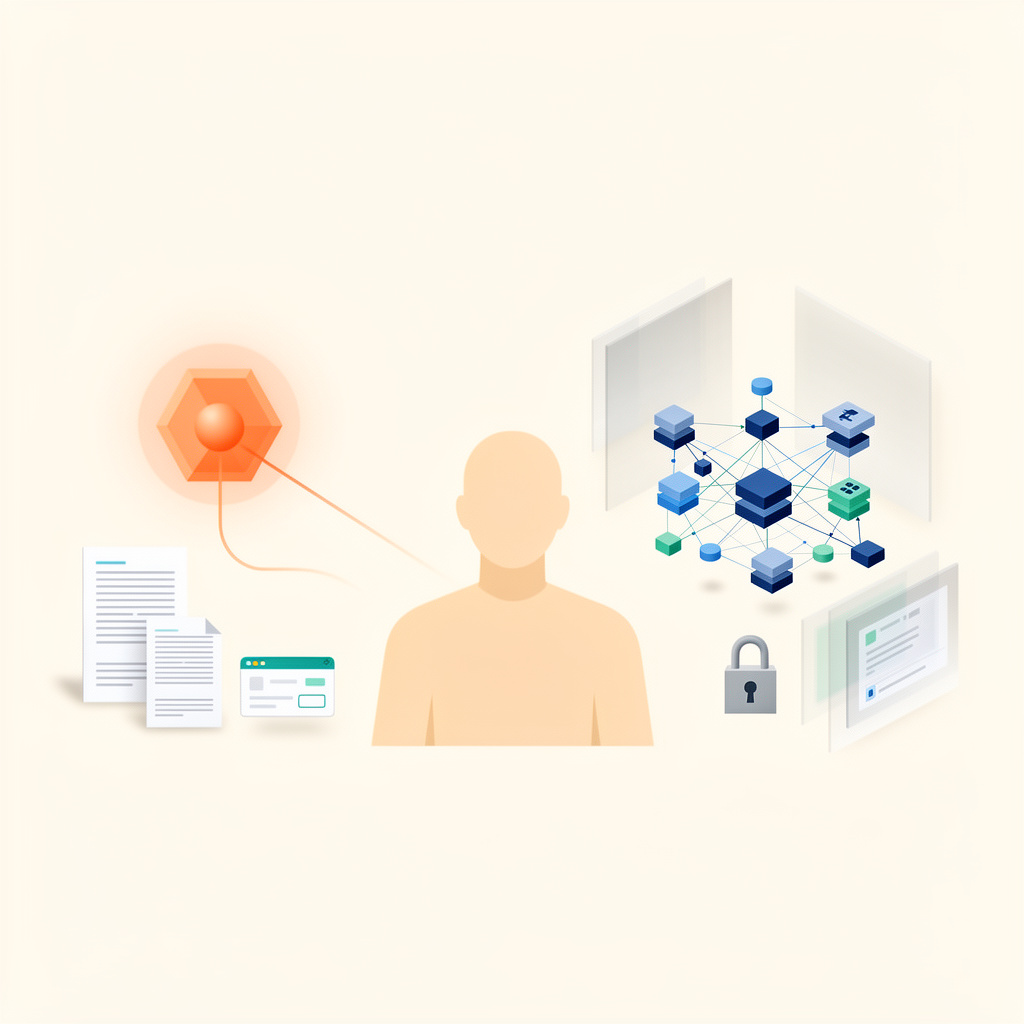
Zimmermann distinguishes between single agents and multi-agent systems. Single agents cope well with simple tasks, she says. For more complex scenarios, systems made up of several agents are better suited, because they can handle the complexity more easily. At least one domain-specific model is often used in the process. As an example she names healthcare: there, several agents could bring together information from different sources and thus speed up patient intake, which so far runs largely by hand.
On the subject of security, the piece points to regional differences. In Europe the EU AI Act limits the use of agents that make decisions about people. In the USA, safeguarding is achieved more through confidence values that agents state for their results. With agent builder platforms, Zimmermann apparently still sees unused potential: many firms have so far built single agents for particular tasks, while networks of several agents have not yet been exhausted. Good identity management systems are also important, clearly regulating who may access which data and how they may use it. That applies especially when agents work together with one another.
In the competitive environment, the piece sees Google as the leading provider of agentic AI. The reason given is its comprehensive technology stack and the option of also using models from third-party providers. Costs play a part as well: high inference costs are named as a burden for companies. The text excerpt available to us breaks off at this point, so no further consequences can be reliably derived from it.
A note from a report by AP-Verlag fits this assessment. According to its title, Gartner expects more than 40 percent of projects involving agentic AI to be discontinued by the end of 2027. The reasoning is not available to us, so it remains open which causes Gartner sees for this.
What Does This Mean?
- For simple, clearly defined tasks, single agents can be enough according to Zimmermann. Multi-stage processes argue more for multi-agent systems.
- Anyone deploying agents in Europe that influence decisions about people should examine the requirements of the EU AI Act early on.
- Identity and access management belongs in the planning from the outset, above all with agents that work together.
- Inference costs and the choice of provider should feed into the business case, as should openness to models from third-party providers.
- The high discontinuation rate Gartner expects by the end of 2027 argues for clearly defined goals and a step-by-step start.
Sources
KI-Agenten – was Gartner CIOs empfiehlt (Computerwoche)
Gartner: Über 40 Prozent der Projekte mit agentischer KI werden bis Ende 2027 eingestellt (AP-Verlag)
All About Security – Podcast-Feed (All About Security)
heise meets – Podcast-Feed (heise meets)
This article was created with AI and is based on the listed sources as well as the language model’s training data.
Further Reading: From Text Generator to Digital Employee