What’s this about?
Microsoft is developing the next version of its operating system, which is expected to launch before 2026. The timing is strategically chosen to close the gap after Windows 10 support ends. Early leaked information points to fundamental technical innovations: the system is expected to be built on a modular architecture and put artificial intelligence far more prominently at its center than before.
Particularly notable are the increased hardware requirements. A dedicated Neural Processing Unit (NPU) with a computing power of at least 40 TOPS will apparently be required to use all functions. This underscores Microsoft’s strategy of establishing AI-capable computers as the new standard.
Background & Context
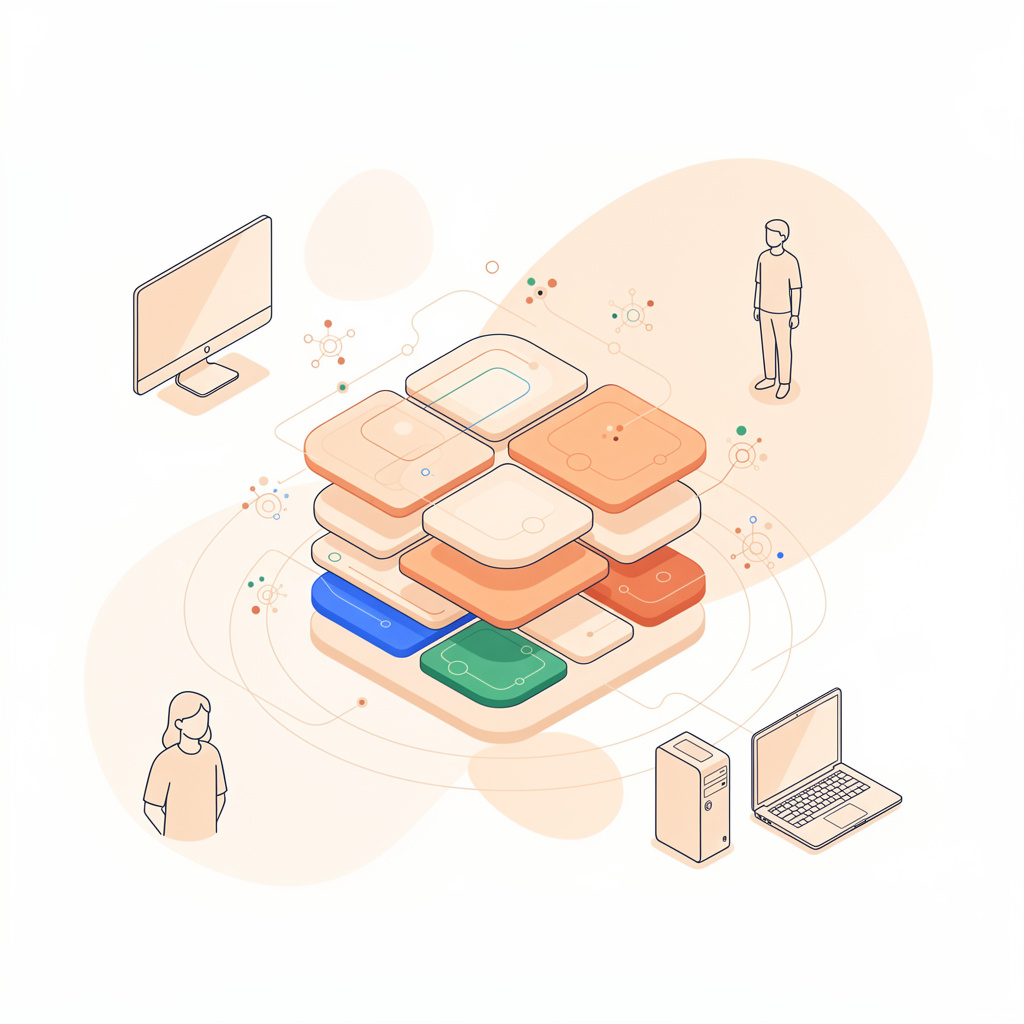
The upcoming operating system carries the internal codename “Hudson Valley Next” and uses a modular architecture known as CorePC. This enables improved separation of various system components, which is intended to increase both security and maintainability. At the center of the innovations is the integration of Copilot – no longer a standalone feature, but a pervasive element embedded into daily workflows.
Planned features include context-aware functions such as automatic task suggestions, real-time summaries, and intelligent sorting of documents. The visual appearance is also set to undergo a fundamental overhaul: leaked design concepts show a floating taskbar as well as transparent elements that prominently place search and AI functions.
Alongside AI integration, improvements in power management and storage usage are expected in order to use hardware resources more efficiently. In terms of security, the system is expected to rely on zero-trust principles and implement more modern authentication methods as well as deeper system isolation. The operating system also remains relevant for gamers – corresponding optimizations are part of the development.
What does this mean?
- Timeline: The release before 2026 aims to seamlessly migrate users from Windows 10, whose support is ending.
- Hardware upgrade required: The requirement for a dedicated NPU means older devices may not support all functions or could be excluded entirely.
- AI as standard: Copilot won’t be optional but deeply integrated into the system – a clear signal of Microsoft’s future strategy.
- Modular architecture: The CorePC structure could simplify updates and maintenance and increase system stability.
- Security focus: Zero-trust approaches and improved authentication respond to growing threats in the digital world.
Sources
Windows 12: Release, Neue Funktionen, Preis – das wissen wir (PC Welt)
Microsoft Community: Expected date for release of Windows 12
This article was created with AI and is based on the sources listed as well as the language model’s training data.
Further Reading: AI & APQC Benchmark: How Microsoft Copilot Becomes a Tool for Building Your Own Benchmark