What’s it about?
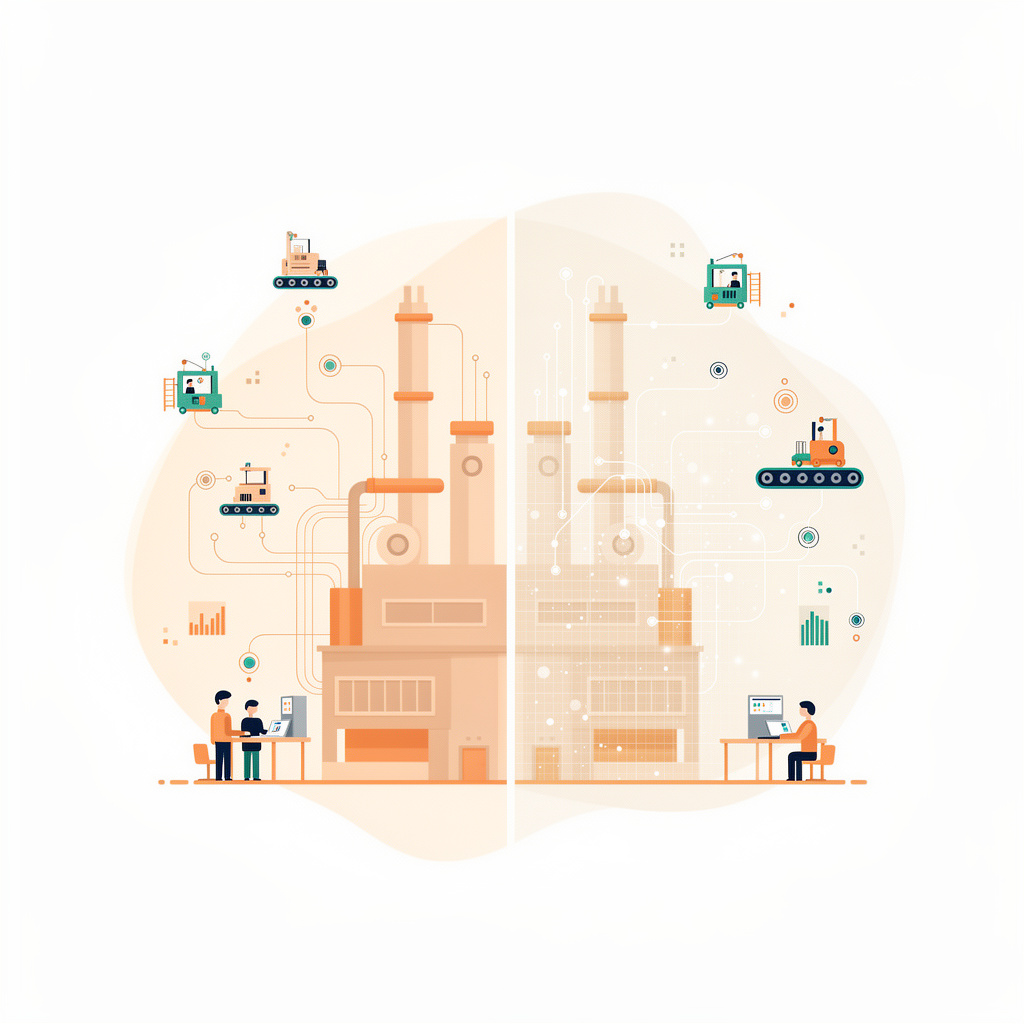
Siemens and Nvidia unveiled a new software platform at CES 2026 designed to establish artificial intelligence as the central operating system for industrial applications. The so-called Digital Twin Composer connects digital twins with real-time data, enabling companies to virtually simulate and optimize production processes before they are implemented in the physical world.
The collaboration between the German technology conglomerate and the chip manufacturer aims to make the entire industrial value chain — from development through planning to manufacturing — smarter and more efficient. By integrating AI-driven simulations, potential problems can be identified before they arise in real production environments.
Background & Context
The presented technology creates a bridge to an industrial metaverse in which users can navigate through photorealistic 3D visualizations and work through complex scenarios. Manufacturers have the ability to test various influencing factors — such as weather changes, material switches, or machine configurations — in advance and analyze their impact on production.
A reference project is the collaboration with PepsiCo: the beverage company is already using the Digital Twin Composer and has reportedly identified around 90 percent of potential disruptions in advance. At the same time, a 20 percent increase in production has been achieved. Siemens is additionally developing AI-based assistance systems for factory workers that simplify access to product data and shorten time-to-market.
In collaboration with Meta and Ray-Ban, Siemens is also working on smart glasses that display safety notices and other relevant information directly in the wearers’ field of view. As a pilot project, the company plans to convert its plant in Erlangen into the world’s first fully AI-controlled factory — as a blueprint for future production sites worldwide.
What does this mean?
- Digital twins combined with AI enable preventive quality assurance and reduce costly downtime in production
- Real-time simulations allow process optimizations to be tested risk-free before implementation
- AI assistance systems support employees with complex tasks and accelerate decision-making
- The integration of wearable technology can increase occupational safety and efficiency in manufacturing
- Companies that adopt AI-driven production systems early could secure competitive advantages in productivity and time-to-market
Sources
Siemens at CES: AI as the operating system for industry (Computerwoche)
Siemens-Nvidia cooperation: AI operating system for the industrial revolution (Cloud Computing Insider)
Siemens and Nvidia proclaim a new industrial revolution (Handelsblatt)
Siemens brings the industrial metaverse to life (Elektrotechnik Vogel)
Siemens presents technologies at CES 2026 to accelerate the industrial AI revolution (Siemens Press Release)
This article was created with AI and is based on the cited sources and the language model’s training data.