Notice: This article was created with AI.
What’s It About?
OpenShell is a runtime environment for autonomous AI agents that is designed for security and privacy. According to the project description, agents may use files, install packages and call APIs within it. They do not receive unrestricted access to data, secrets or networks in the process. Instead, defined policies determine what is permitted, and the environment monitors and enforces these rules.
Background & Context
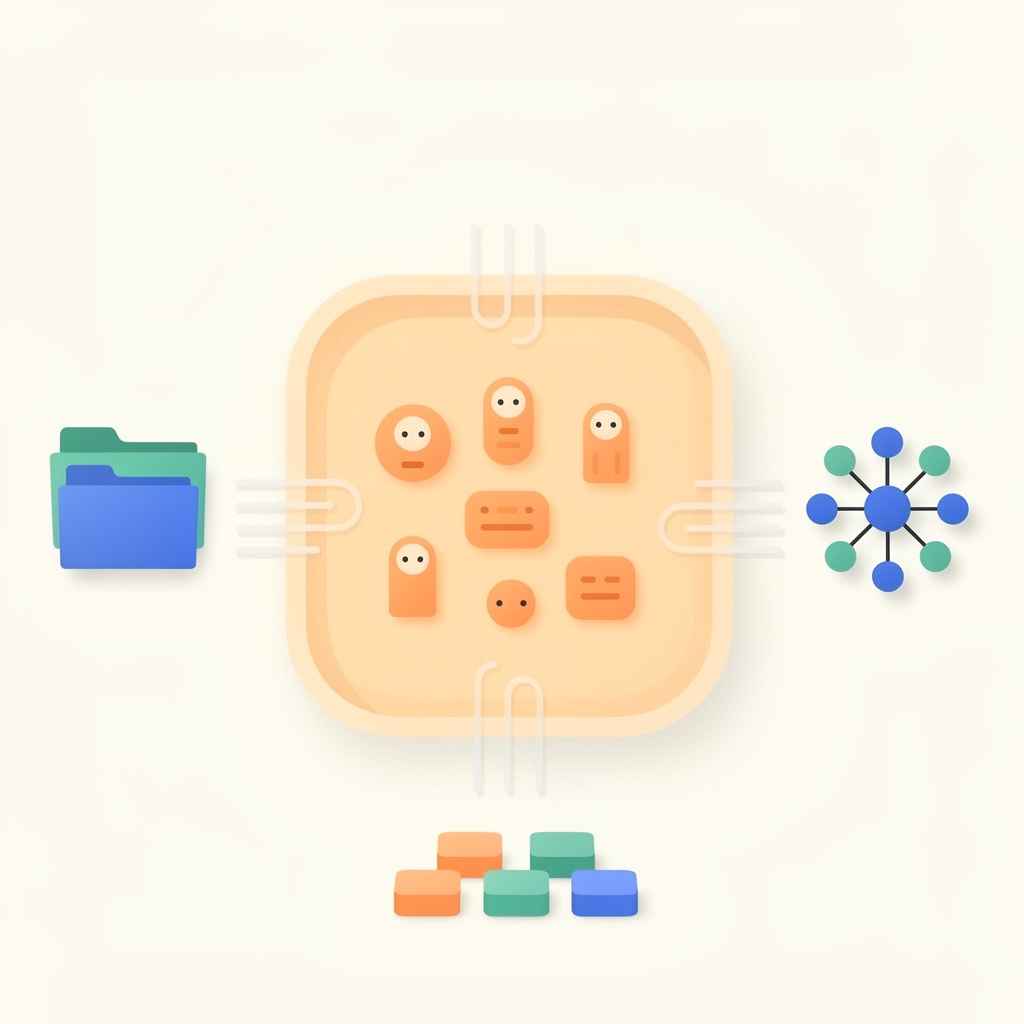
According to the description, OpenShell consists of operating components (CLI, SDK and TUI) that communicate with a central control plane, the gateway. The gateway comprises an API server, a policy prover, a durable state management and a compute driver. Every agent runs in a sandbox of its own. There the kernel controls which files and system calls may be accessed. Every network connection passes a policy check before it leaves the sandbox.
A further building block are formal verification methods. Before a policy change is applied, they are meant to show which new access rights would arise from it. A human is then supposed to review the change and approve it. In this model agents count as untrusted workloads with heavily restricted rights. That is meant to reduce the risks from unwanted behavior. According to the description, OpenShell can be deployed on Kubernetes with Helm, among other options. A sandbox manager then creates environments under defined policies.
Agents can also use predefined capabilities in the environment, for instance for writing policies or debugging gateways. The central administration is meant to secure a uniform level of security across several agents.
What Does This Mean?
- Teams running several agents in parallel get, according to the description, a central place to define access rules uniformly.
- The combination of kernel control and network checking is meant to limit agents even when they act faultily or in unwanted ways.
- The human approval provided for policy changes keeps decisions about new rights the responsibility of the operator.
- How well the concept proves itself in production cannot be judged from the project description alone. Interested parties should examine that in the documentation and in a practical test.
Sources
OpenShell – A safe, private runtime for fleets of autonomous AI agents (GitHub)
OpenShell: Überblick in der Dokumentation (docs.nvidia.com)
OpenShell erklärt: eine sicherere Laufzeitumgebung für KI-Agenten (DEV Community)
Bericht zur OpenShell-Laufzeitumgebung für Agenten (Quantum Zeitgeist)
OpenShell im Tool-Verzeichnis (AI-TLDR)
This article was created with AI and is based on the listed sources as well as the language model’s training data.
Further Reading: Paperclip: When AI Agents Get an Org Chart