Notice: This article was created with AI.
What’s It About?
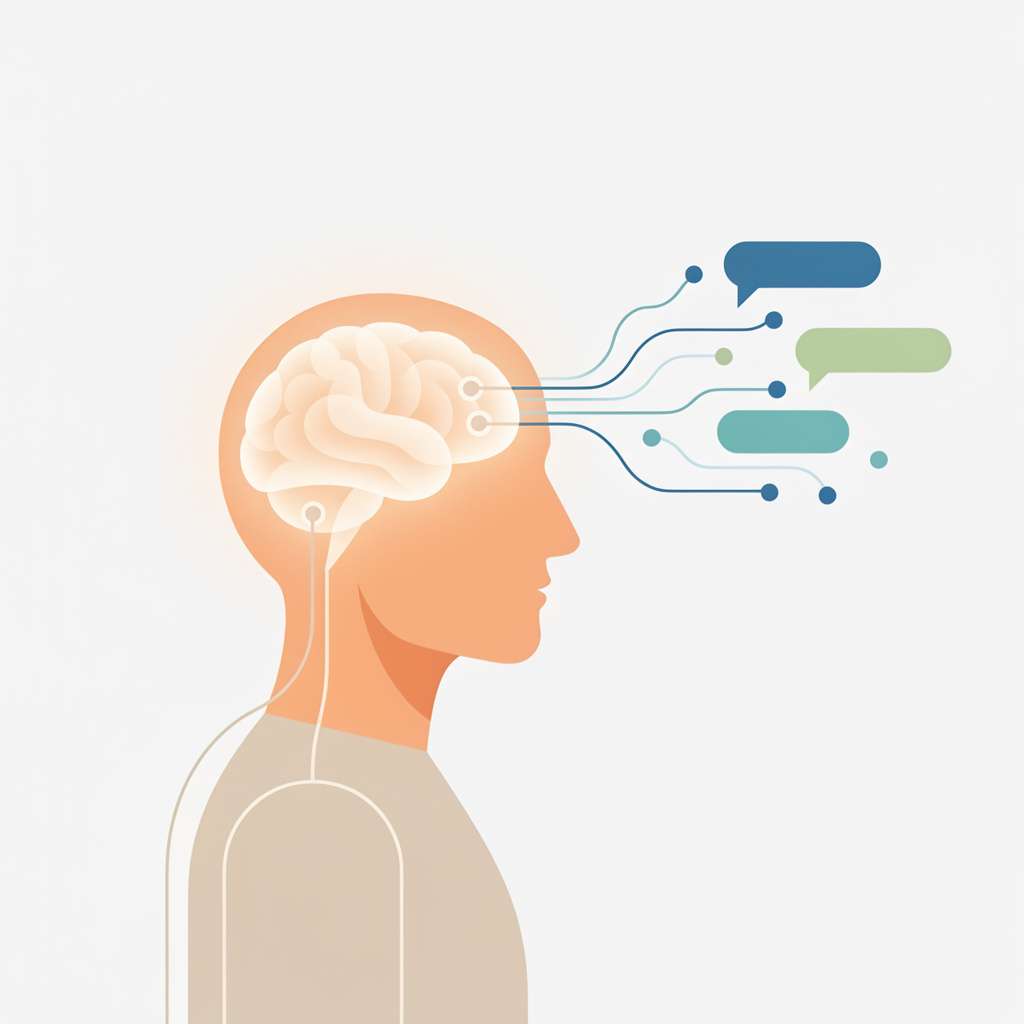
A brain-computer interface has given a man with amyotrophic lateral sclerosis the ability to express himself again. Casey Harrell, who had lost his ability to speak due to the progressive nerve disease, has been able to communicate again since the implantation in 2023 – and with remarkably high precision. The technology converts his thoughts into written language with over 97 percent accuracy.
The system consists of four tiny electrode arrays placed in the speech-relevant area of his brain. A total of 256 electrodes capture the neural signals that are normally responsible for speech coordination. Artificial intelligence translates these brain signals into text in real time, which Harrell can use for a wide variety of purposes.
Background & Context
What makes this application special: Harrell can operate the brain-computer interface independently, without scientists having to be constantly present. This autonomy distinguishes the solution from earlier experimental systems and makes it suitable for everyday use. He uses the interface to write emails, take part in video conferences, and interact with his family.
The effects go beyond pure communication: thanks to the technology, Harrell can continue to work full-time, which is of enormous importance both for his financial situation and for his sense of self-worth. Over the course of more than two years, he has reportedly already produced several million words with the system.
The electrodes were precisely implanted in the precentral gyrus of the left hemisphere of the brain – the region responsible for the motor control of speech production. This area often remains functional in ALS patients even when the muscles themselves no longer respond. The researchers use this preserved brain activity to decode the intention to communicate.
What Does This Mean?
- Breakthrough for those affected: The technology could open up new perspectives for many people with severe communication impairments – for example due to ALS, stroke, or locked-in syndrome.
- Professional participation: The ability to continue working despite severe physical limitations has far-reaching social and economic implications for the inclusion of people with disabilities.
- Technological advancement: Researchers are already working not only on generating text but also on reconstructing Harrell’s original voice – an important emotional aspect of personal identity.
- Autonomy and quality of life: Independent use without permanent technical support represents a decisive step toward practical applicability and considerably increases quality of life.
- Scalability: The success of this case could pave the way for broader availability of such interfaces, provided that regulatory and economic hurdles can be overcome.
Sources
Gehirn-Implantat ermöglicht ALS-Patient neue Kommunikationswege (t3n)
Zwei Jahre, zwei Millionen Wörter: Wie ein Gehirnimplantat das Leben eines ALS-Patienten verwandelte (Merkur)
ALS-Patient nutzt neue Gehirn-Computer-Schnittstelle (Univadis)
Brain-Computer Interface helps patient speak again (Brown University)
Advances in Brain-Computer Interface Technology Help One Man Find His Voice (ALS Association)
This article was created with AI assistance and is based on the listed sources as well as the language model’s training data.
Further Reading: AI Audio 2022 to 2026: Four Years in Which the Voice Lost Its Innocence