Notice: This article was created with AI.
What’s It About?
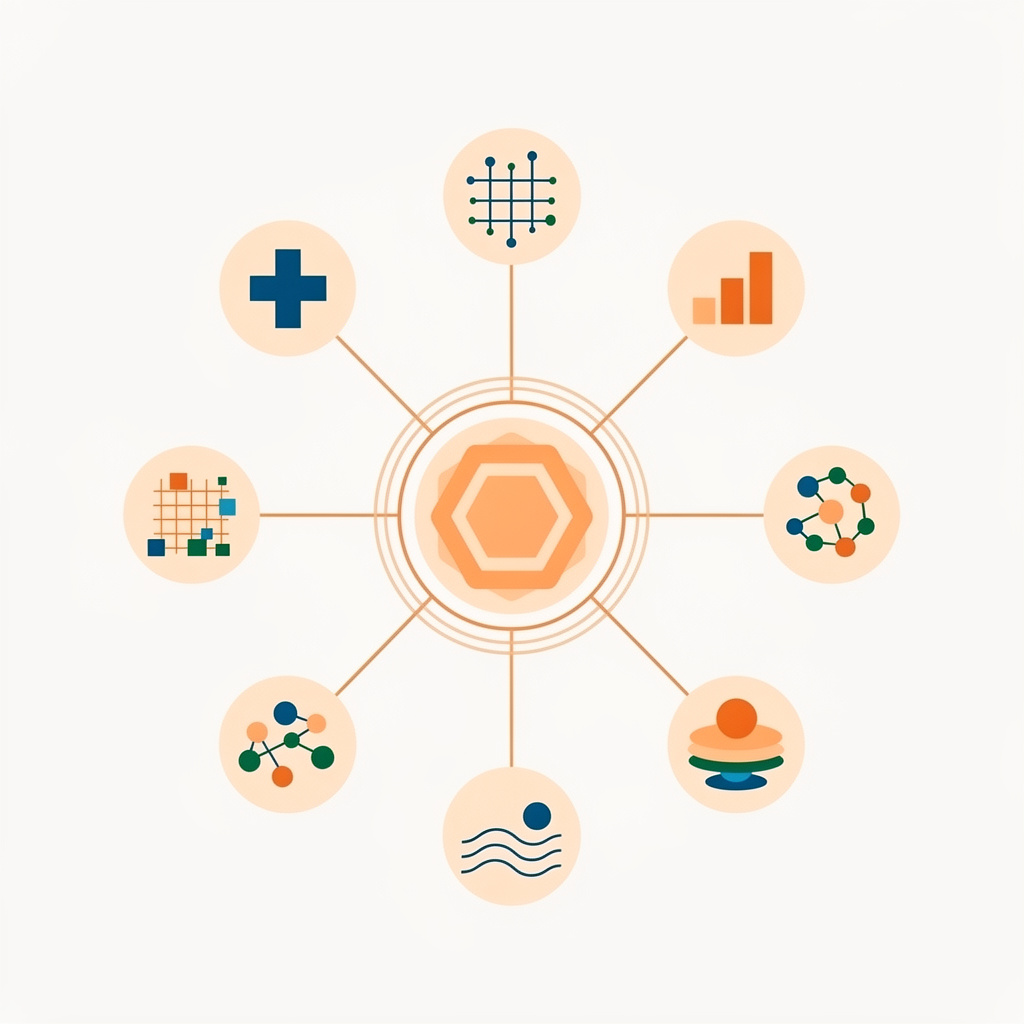
AI is becoming increasingly specialized: rather than universally applicable language models, research institutions and companies are developing more and more Large Language Models for specific domains. These domain-specific LLMs focus on individual sectors such as medicine, finance, law, or climate research, delivering significantly more precise results than their general-purpose counterparts. Currently, 17 specialized models already exist — ranging from BioGPT for biomedical applications and BloombergGPT for financial markets to ClimateBERT for climate science.
Background & Context
The motivation for domain-specific models lies in the unacceptable hallucination rates of general-purpose LLMs in critical professional applications. While a universal model like GPT-4 has broad knowledge, it often lacks the depth and reliability required for expert use cases. Specialized models, by contrast, are trained on curated, domain-specific datasets that are frequently validated by subject matter experts. This leads to higher accuracy alongside lower operating costs, as the models can be built more compactly. The technological foundation is typically Transformer architectures, the standard for natural language processing. The decisive difference lies in training: instead of general internet data, these models work with specialized ontologies, technical literature, and structured expert knowledge. Models such as Med-PaLM or ChatGPT Health are also designed to integrate seamlessly into existing industry software. The range of use cases extends from diagnostic support in medicine to automated financial analyses and the evaluation of climate data.
What Does This Mean?
- Higher precision in specialist fields: Domain-specific LLMs deliver validated, reliable answers rather than general information, reducing the risk of misinformation in critical applications
- Cost efficiency through specialization: Smaller, focused models consume fewer computational resources and are cheaper to operate than large universal models with comparable domain expertise
- Training data quality is decisive: Building domain-specific ontologies and involving subject matter experts is labor-intensive but essential for the validity of results
- Ethics and data privacy remain central: Especially in sensitive areas such as healthcare or law, specialized LLMs must meet strict compliance and data protection requirements
- Practical integration as a success factor: Easy embedding into existing industry solutions is what determines real-world adoption
Sources
- 17 LLMs für Spezialdomänen (Computerwoche)
- Domain-Specific LLM (Aisera Blog)
- 6 Examples of Domain-Specific Large Language Models (Open Data Science)
- Why Specialized LLMs Are the Future of Generative AI (Techzine)
This article was created with AI assistance and is based on the listed sources as well as the language model’s training data.
Further Reading: From Text Generator to Digital Employee: How AI Is Changing the World in Four Stages