Notice: This article was created with AI.
What’s it about?
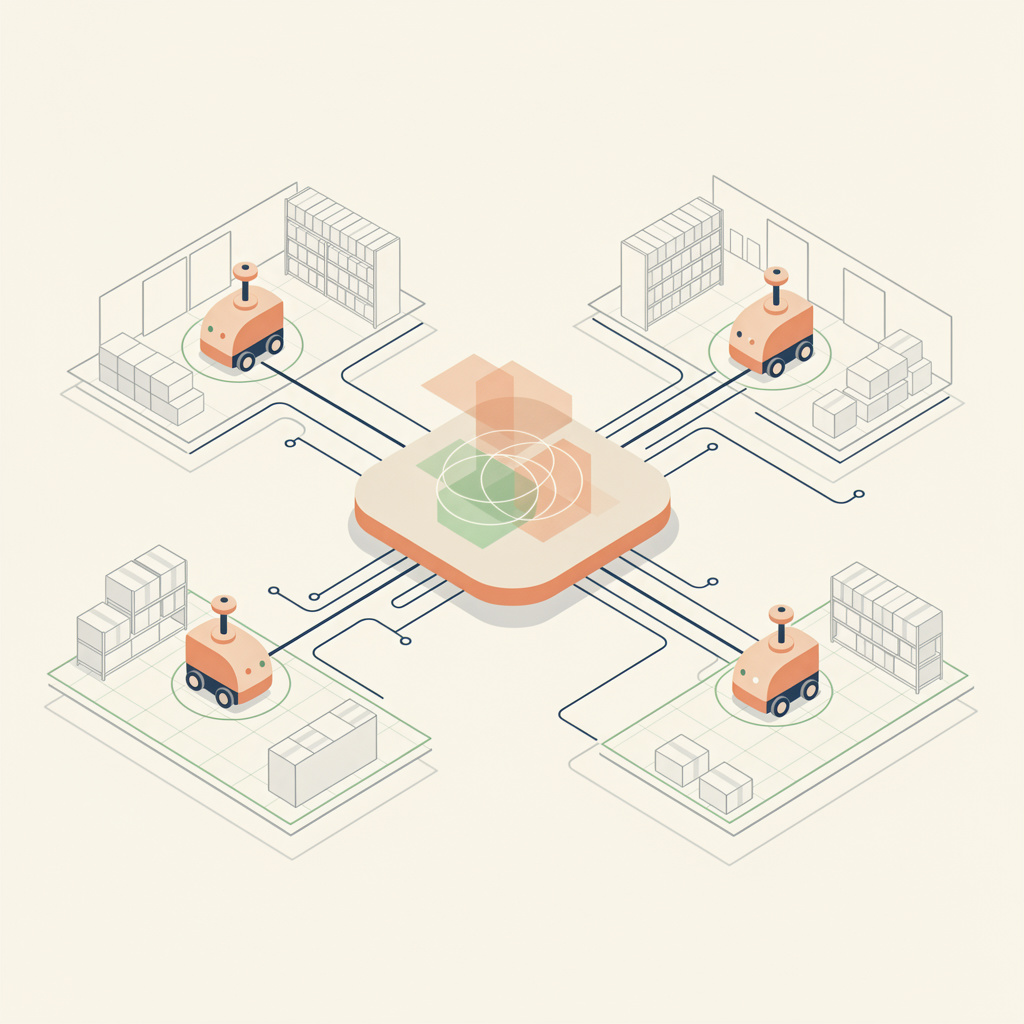
The Otto Group is advancing the automation of its logistics sites and is jointly developing an innovative platform with technology company Nvidia and consulting firm Reply for centrally controlling robot fleets. At the core is a so-called Robotic Coordination Layer that combines artificial intelligence with digital representations of real warehouses. The solution is designed to coordinate robots from different manufacturers in real time and optimally synchronize their movements and tasks.
The first test environment is the Hermes distribution center in Löhne, where the platform’s functions are being tested under real conditions before being rolled out to additional sites. The technology is based on Nvidia’s Omniverse libraries and the Isaac platform for robotics AI, operated on the Google Cloud Platform.
Background & Context
Modern warehouses increasingly rely on heterogeneous robot fleets from different manufacturers that have often operated in isolation. The new coordination layer creates a higher-level control plane that integrates functions from both fleet management and warehouse management systems. Central to this is the digital twin, which virtually maps the physical warehouse and provides precise real-time information on the positions, movements, and tasks of all robots.
This virtual representation enables not only monitoring but also dynamic simulations. Companies can use it to simulate various load scenarios — such as seasonal demand peaks — and plan the optimal deployment of robots and personnel in advance. Authorized users can access and adjust robot workflows directly through the platform as needed. In the long term, the Otto Group aims for end-to-end digitalization of its logistics processes.
The collaboration fits into a broader trend in which retail and logistics companies rely on AI-supported automation to increase efficiency and respond more flexibly to market fluctuations. Nvidia is positioning itself as a central technology partner for the development of intelligent robotics solutions in industrial environments.
What does this mean?
- Companies with complex logistics structures can optimize the utilization of their robot fleets through centralized AI control and identify bottlenecks early.
- Digital twins enable forward-looking planning and simulation of different operational scenarios, supporting investment decisions for personnel and technology.
- Integration of different robot systems via a unified platform reduces interface problems and increases interoperability within the warehouse.
- Real-time coordination improves responsiveness to short-term order fluctuations and can reduce lead times.
- The approach could serve as a blueprint for other industries where autonomous systems need to be coordinated, such as in production halls or distribution centers.
Sources
Logistics revolution: How Otto and Nvidia are building the warehouse of the future (Computerwoche)
Otto and Nvidia want to make AI robots standard in warehouses (Handelsblatt)
Otto and Nvidia: AI automation in logistics (t3n)
Otto Group Enables AI-driven Intelligent Robot Coordination (Business Wire)
Otto Group revolutionizes logistics (Nvidia Blog)
This article was created with AI and is based on the cited sources and the language model’s training data.
Further Reading: From Text Generator to Digital Employee – AI Changing the World in Four Stages