What’s it about?
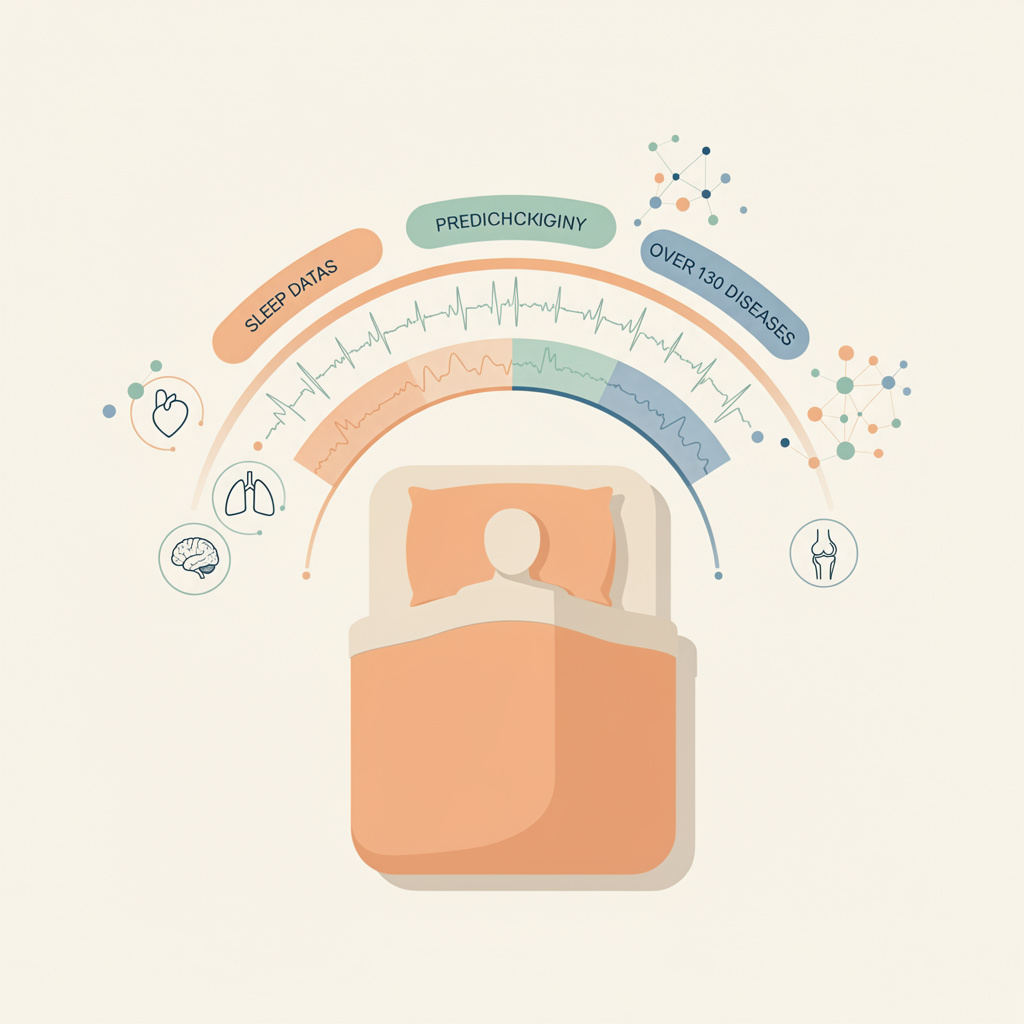
Scientists at Stanford University have presented a novel AI system called SleepFM that can identify risks for more than 130 different diseases based on sleep data. The system evaluates information from polysomnography — a procedure in which various physiological parameters such as brain activity, heart function, and breathing patterns are recorded during sleep. After just a single night, potential health risks can be detected, often years before the first symptoms appear.
The range of predictable diseases extends from neurodegenerative conditions such as dementia and Parkinson’s disease to cardiovascular events and various types of cancer. The model is based on an extensive dataset of more than 585,000 hours of sleep recordings from around 65,000 subjects.
Background & Context
SleepFM is classified as a so-called foundation model — an AI architecture that, similar to large language models, can process various data modalities and derive complex patterns from them. The central technical challenge was translating the different physiological signals into a consistent data language that the system can interpret. The connection between sleep quality and general health is well documented scientifically — SleepFM uses this connection for the first time systematically for long-term prognoses.
The innovation lies less in polysomnography itself, which has been established for decades, but in the AI-driven interpretation of the data. While such examinations were previously used mainly to diagnose sleep disorders, the preventive approach opens up entirely new perspectives. The system identifies subtle patterns in physiological signals that would be barely detectable for human experts and that may indicate future health risks.
It should be noted critically, however, that a complete polysomnography still requires examination in a sleep laboratory. The transferability to consumer wearables and sleep trackers remains to be seen. Furthermore, further validation in different populations and clinical settings is needed before the system can be used in broad medical practice.
What does this mean?
- Manufacturers of medical diagnostic devices could integrate AI-powered analysis functions into their polysomnography systems, significantly expanding their utility.
- Health insurance companies potentially gain new instruments for risk assessment and could develop preventive programs based on individual data.
- Companies in digital health and wearables should monitor this development, as a simplification of data collection could enable new business models for preventive health services.
- Pharmaceutical companies and research institutions can use such systems for early detection in clinical studies and identify high-risk patients more specifically.
- Employers with occupational health management could benefit in the long term from preventive screening programs, provided data protection and ethical questions are resolved.
Sources
SleepFM: AI model predicts disease risks based on sleep data (Heise)
AI detects risk for 130 diseases during sleep (Deutsche Welle)
AI Predicts Risk of 130 Diseases Using Sleep Study Data (Inside Precision Medicine)
AI predicts 130 diseases during sleep (Pharmazeutische Zeitung)
Diagnosis during sleep: Innovative AI model detects disease risks (Berliner Morgenpost)
SleepFM predicts disease risks based on sleep data (Igor’s Lab)
Study: AI detects risks for over 100 diseases after just one night of sleep (Euronews)
Stanford’s AI Predicts Disease Risk From a Single Night of Sleep (SciTechDaily)
Can AI predict diseases through sleep analysis data? (SWR)
How AI can detect health risks just from the way you sleep (Deutsche Welle)
The Loop – January 27, 2026 (Stanford Magazine)
This article was created with AI and is based on the cited sources and the language model’s training data.