Notice: This article was created with AI.
What’s It About?
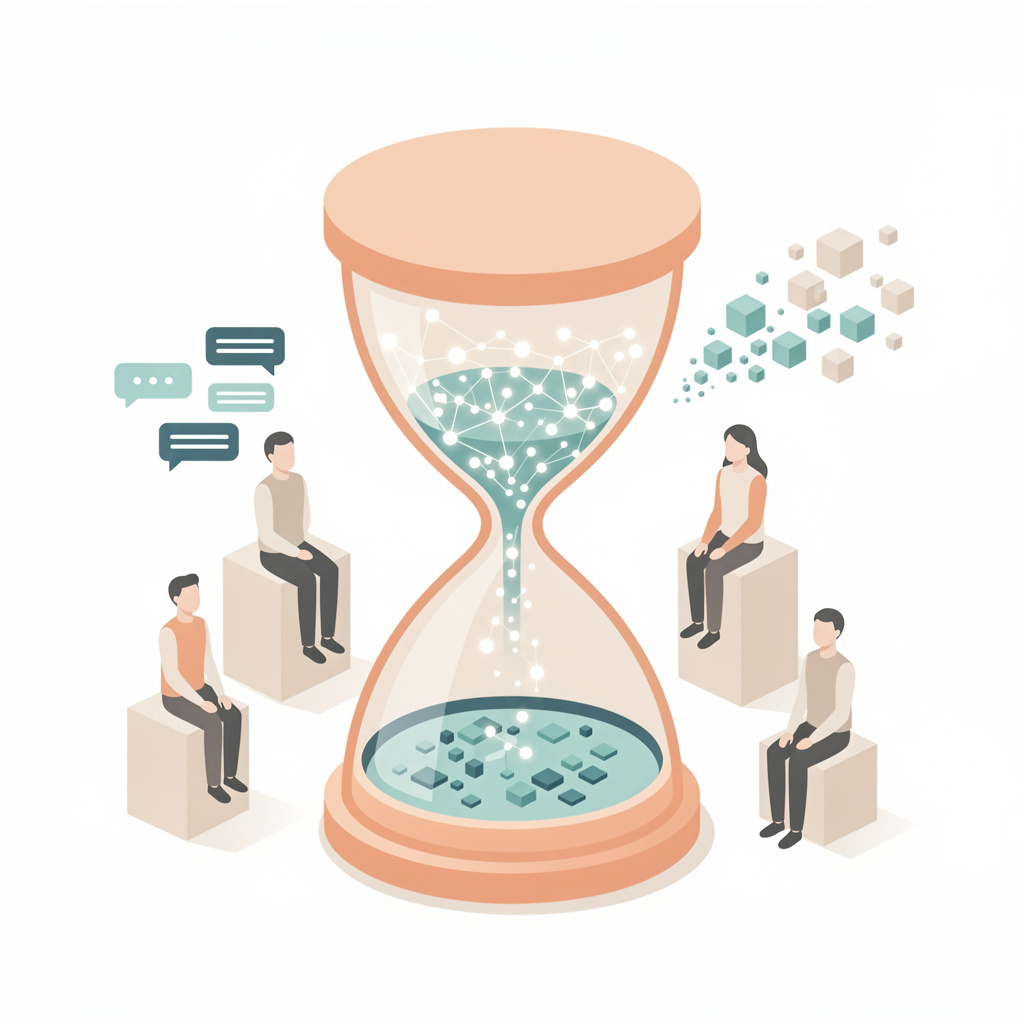
Artificial intelligence enables considerable time savings for employees in customer service. According to the Boston Consulting Group’s “Global AI at Work Survey”, 42 percent of respondents in this area can save more than a full working day every week. But the euphoria about this efficiency gain is clouded: two thirds of those who benefit from time savings receive no instructions at all on how to put the freed-up capacity to sensible use. As a result, more than half of the freed-up time is not used for strategic or value-adding activities.
Background & Context
The Boston Consulting Group study reveals a fundamental dilemma in the integration of AI tools into companies: technology alone does not create value. Without a clear strategy for using the working time saved, the productivity potential fizzles out. In organizations with an open AI culture in particular, the time gained is used more productively – for further training or creative projects, for example. The survey also shows that around 65 percent of executives expect AI agents to take over at least half of their tasks within the next three years.
Another aspect concerns cognitive load: in technical teams especially, the use of AI can lead to increased mental strain, which has a negative effect on productivity. The successful implementation of AI depends decisively on how well companies integrate the tools into existing processes and train employees accordingly. Executives therefore have to do more than measure AI usage; they have to define concretely how time saved can be reinvested in the company.
What Does This Mean?
- Companies should develop binding guidelines on how employees can use the time gained for strategic tasks, innovation, or further training.
- An open AI culture and transparent communication encourage the productive use of time savings and prevent efficiency gains from fizzling out.
- Executives have to understand AI integration as a change process that requires training, clear processes, and a redefinition of work structures.
- The mental strain caused by new technologies should be actively monitored in order to avoid negative effects on productivity.
Sources
Produktiver dank KI – aber wohin mit der gewonnenen Zeit (Computerwoche)
3 Stunden: Geringe KI-Zeitersparnis (OnlineMarketing.de)
KI spart Zeit ein, steigert aber nicht die Produktivität (Haufe)
This article was created with AI and is based on the listed sources as well as the language model’s training data.
Further Reading: The Future of AI