Notice: This article was created with AI.
What’s It About?
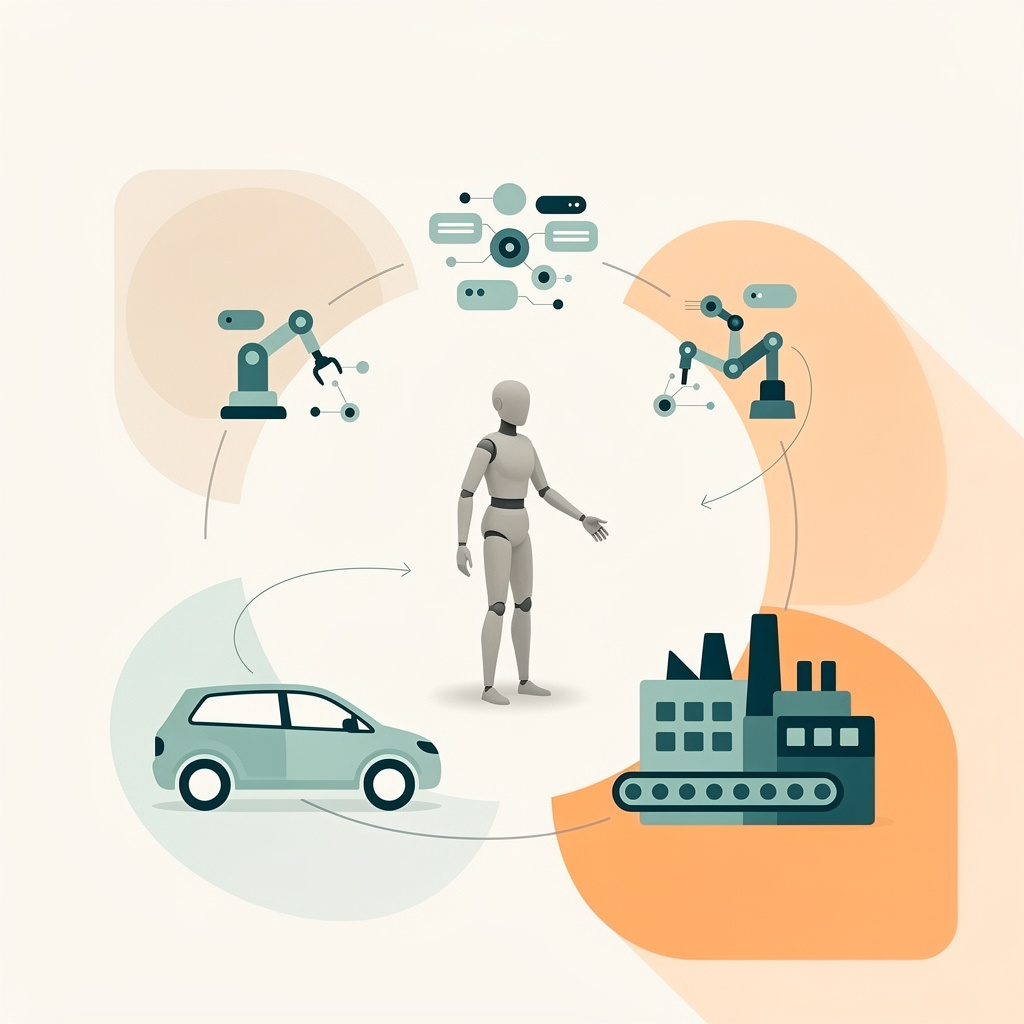
The Consumer Electronics Show 2026 marked a turning point in the development of artificial intelligence. At its center was the concept of physical AI – intelligent systems that go beyond pure data analysis and can act directly in the material world. In his keynote, Nvidia CEO Jensen Huang illustrated how this technology could revolutionize autonomous driving, manufacturing, and logistics chains.
The focus was on applications that intelligently control entire production environments and transport systems. Instead of isolated individual solutions, the trade show presented connected ecosystems in which AI models coordinate and optimize complex physical processes.
Background & Context
Physical AI refers to systems that interpret sensor data from the real world and carry out physical actions based on it. With the open-source model Alpamayo, Nvidia demonstrated an approach developed specifically for autonomous vehicles that understands traffic situations and environmental factors while prioritizing safety aspects.
In industrial manufacturing, Nvidia is collaborating with Siemens on digital twins of production facilities. These virtual replicas not only monitor ongoing operations but also enable predictive maintenance and process optimization. By integrating different data streams – from weather conditions to supply chain information – potential disruptions can be identified early.
The Oshkosh Corporation was cited as a practical example, improving the traceability of components through AI-powered transparency in the supply chain. Defects or quality problems can thus be located and remedied more quickly. Siemens also plans to transfer insights from industrial production to pharmaceutical research.
What Does This Mean?
- Paradigm shift in automation: AI leaves the digital sphere and becomes an active player in physical environments – from factory halls to public roads.
- Networking instead of isolated solutions: The presented concepts aim at end-to-end systems that can holistically control production, logistics, and operations.
- Safety as a core topic: Especially in autonomous driving, the focus is on robust models that must reliably assess complex traffic situations.
- Preventive instead of reactive control: Digital twins and connected data sources enable proactive action before problems occur.
- Cross-industry application: The technology shows potential for diverse sectors – from the vehicle industry through classic manufacturing to pharmaceuticals.
Sources
CES 2026: KI hält Einzug in die physische Welt (Computerwoche)
Jensen Huang Unveils Nvidia Physical AI at CES (Observer)
NVIDIA Releases New Physical AI Models (Nvidia Investor Relations)
2026 CES Special Presentation (Nvidia Blog)
This article was created with AI assistance and is based on the listed sources as well as the language model’s training data.
Further Reading: Paperclip: When AI Agents Get an Org Chart