Notice: This article was created with AI.
What’s It About?
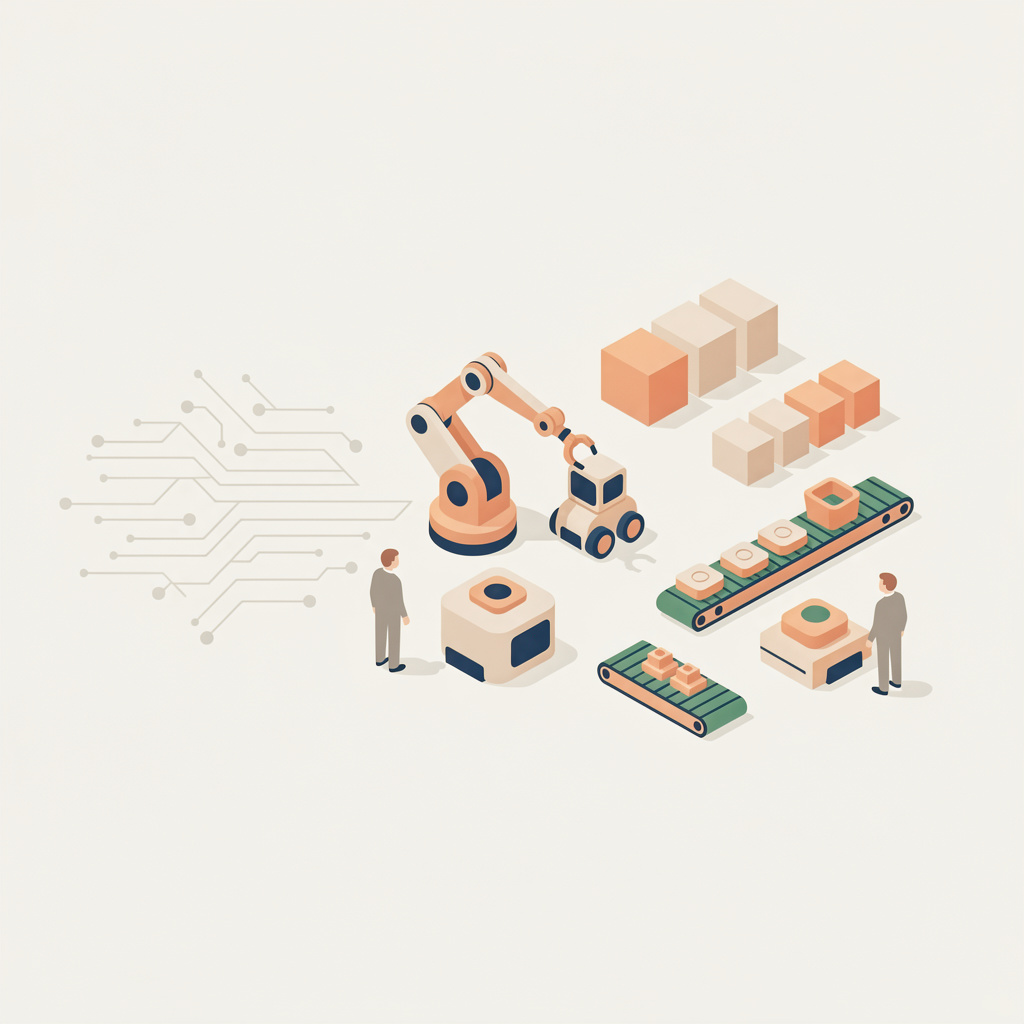
Artificial intelligence is increasingly leaving the purely digital sphere and actively intervening in physical reality. Physical AI describes AI systems that do not merely process information, but can also perform concrete actions in the real world. They understand physical laws and spatial relationships to intelligently control machines, robots, and production facilities. In Germany, six percent of industrial companies are already using this technology — a sign of a dynamic upward trend.
Background & Context
Unlike conventional AI applications designed primarily for data analysis or text generation, Physical AI is distinguished by its ability to influence and optimize physical processes. These systems combine sensor data with machine learning and real-time processing to handle complex tasks in the material world.
The fields of application span multiple industries: in medical technology, Siemens Healthineers uses AI-controlled 3D camera systems for more precise patient positioning in CT scanners, reducing radiation exposure. The energy sector also benefits: RWE uses Physical AI to predict erosion damage to rotor blades on offshore wind turbines, enabling predictive maintenance. In shipyards, humanoid robots take over hazardous welding work, reducing the risk to human workers in high-risk environments.
The concept of Agentic Production is particularly promising: production modules organize themselves autonomously through software agents and continuously optimize manufacturing workflows. Further practical examples include assistance systems for rescue helicopters and digital twins in intralogistics that simulate and improve warehousing and transport processes.
A key challenge remains establishing a trustworthy framework for AI decisions. Experts emphasize the need for a so-called Trust Layer to minimize safety risks and ensure acceptance in heavily regulated industries. Without transparent and traceable decision-making structures, broad industrial adoption of Physical AI is likely to face considerable resistance.
What Does This Mean?
- Physical AI marks a paradigm shift from purely data-processing to action-capable artificial intelligence in the real world
- The technology enables significant efficiency gains and risk reductions in industry, energy, and medical technology
- Six percent adoption in German industry signals the beginning of a larger wave of transformation
- Trustworthiness and safety through transparent decision-making structures remain critical success factors
- The autonomous organization of production processes by software agents could fundamentally reshape manufacturing landscapes
Sources
- AI Learns to Walk: How Physical AI Is Conquering the World (Computerwoche)
- Bitkom Press Release: When AI Moves the Real World
- Capgemini: Companies See Physical AI as a Turning Point for Robot Deployment
- Bitkom Publication: Physical AI – Intelligence in the Physical World
This article was created with AI assistance and is based on the listed sources and the training data of the language model.
Further Reading: From Text Generator to Digital Employee: How AI Is Changing the World in Four Stages