Notice: This article was created with AI.
What’s it about?
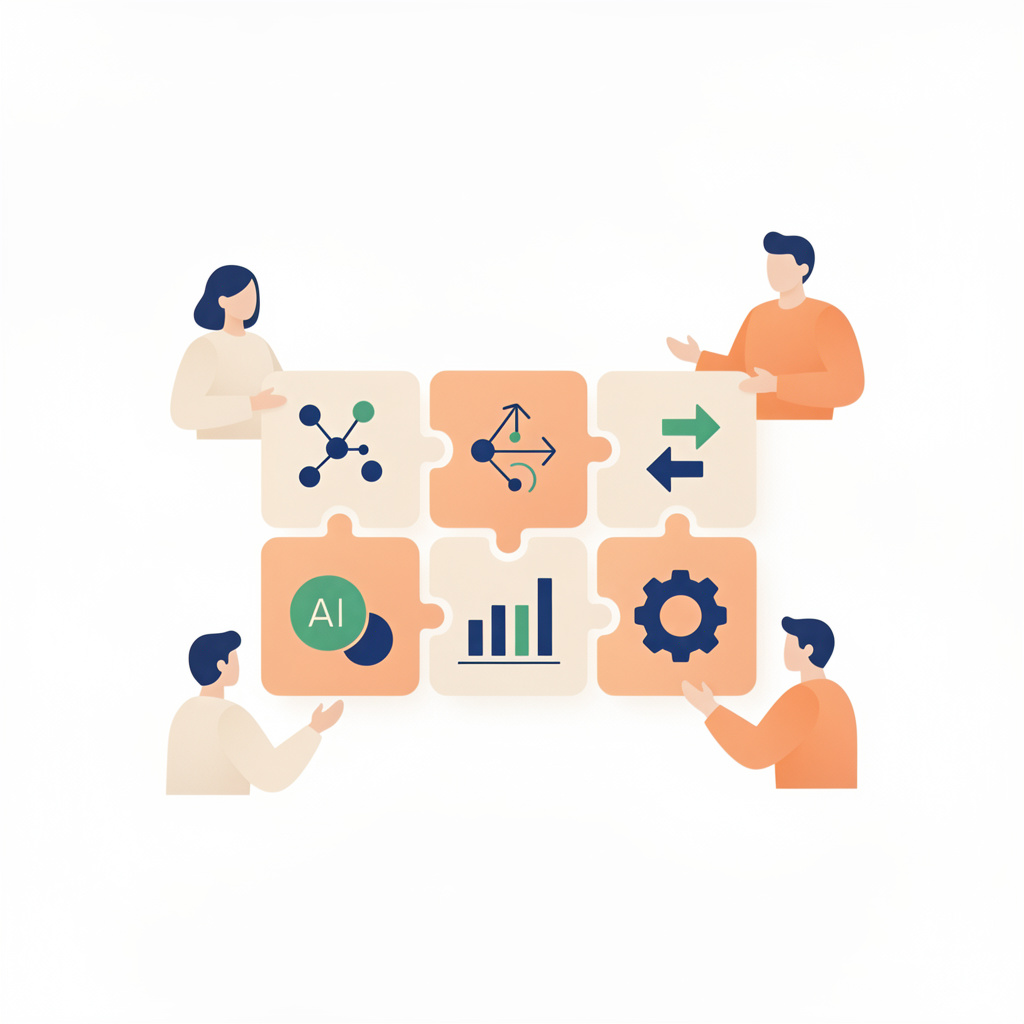
Low-code platforms are changing the way companies develop software. Instead of complex programming, these systems rely on visual tools and ready-made building blocks to create applications more efficiently. Particularly for organizations looking to digitalize their business processes and drive innovation, new possibilities are opening up. The technology reduces dependence on traditional development teams and significantly accelerates the implementation of digital solutions.
Various application areas demonstrate how versatile low-code approaches can be deployed: from connecting with artificial intelligence and automating workflows to modernizing user interfaces. Companies of all sizes are already using this technology successfully to increase their productivity and create business value.
Background & Context
The combination of low-code with generative AI marks an important development step. By using technologies such as Retrieval Augmented Generation, companies can extend the functionality of their applications while simultaneously reducing development time. This symbiosis makes it possible to implement intelligent features without deep AI expertise.
A practical example comes from the US Census Bureau, which transformed paper-based workflows into digital, automated processes using low-code platforms. Such projects show that even complex, historically grown structures can be modernized. The technology also allows for rapid revision of user interfaces without requiring extensive redevelopment of backend systems — a significant relief when adapting to changing customer expectations.
Tailored workflows can be created for specific departments, functioning across departments and improving both efficiency in marketing and IT as well as customer retention. Another advantage lies in real-time data analysis: low-code tools make it possible to consolidate information from various sources, visualize it, and thereby optimize decision-making. This also works in teams with varying technical backgrounds. Cloud-based development approaches with low-code additionally simplify the creation of scalable and flexible services and products.
What does this mean?
- Companies can implement software projects with fewer development resources and in less time, significantly shortening time-to-market
- The democratization of software development enables business departments to create their own solutions and thereby bypass IT bottlenecks
- Through the integration of AI into low-code environments, intelligent applications become accessible even to organizations without specialized data science teams
- The modernization of legacy systems is made easier, as user interfaces can be renewed without completely rebuilding backend infrastructure
- Real-time analytics and data visualization improve data-driven decision-making across different levels of the organization
Sources
7 ways to low-code innovation (Computerwoche)
Revolutionize business processes with low-code: use cases and examples (ezeep)
Low-code examples in practice (Objektkultur)
What is low-code? (Google Cloud)
This article was created with AI and is based on the cited sources and the language model’s training data.
Further Reading: Self-Hosting n8n on Synology NAS – Step-by-Step Guide