Notice: This article was created with AI.
What’s it about?
The World Economic Forum (WEF) presented a comprehensive report on economic transformation through artificial intelligence at its annual meeting in Davos. The analysis documents, through concrete case studies from more than 30 countries and over 20 economic sectors, that AI is now delivering measurable performance improvements in practice. The phase of mere experimentation appears to be over for pioneering companies.
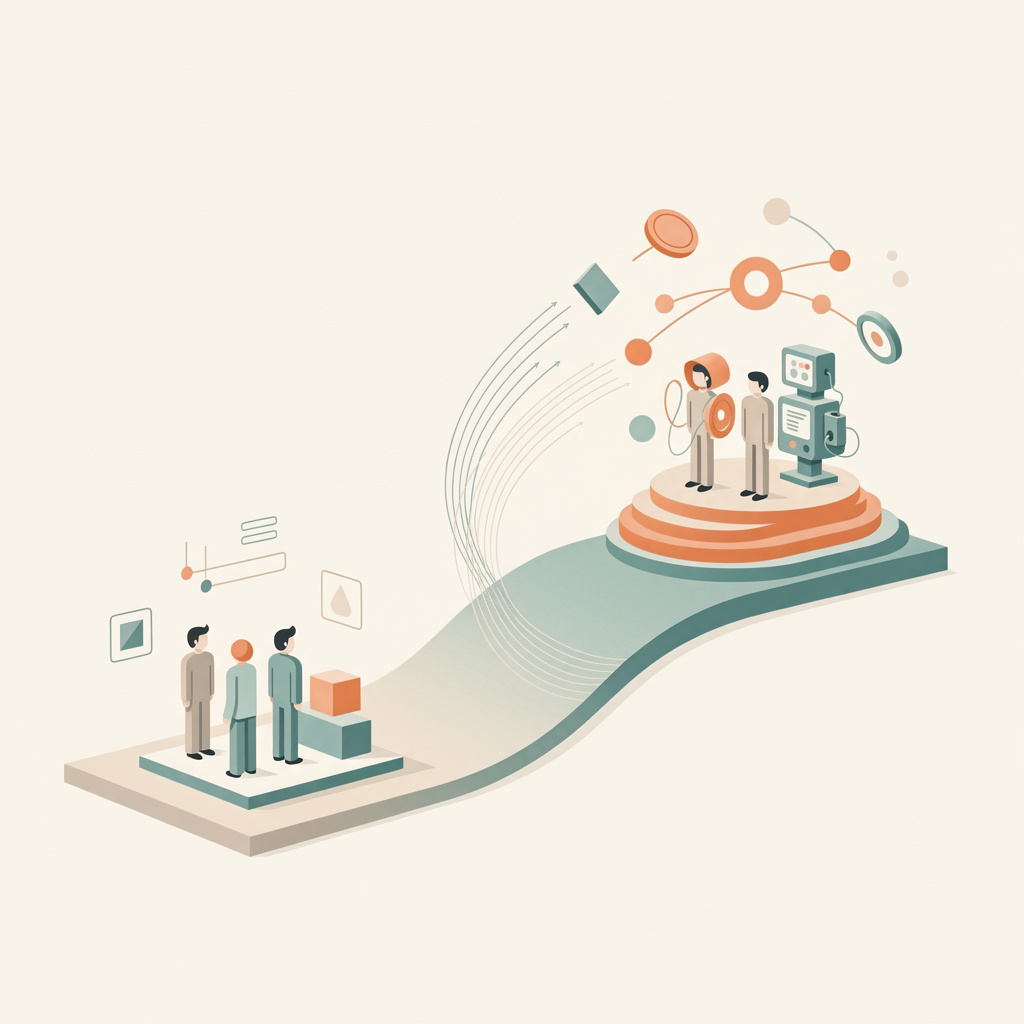
At the same time, a growing disparity is emerging: while some organizations are successfully integrating AI into their core processes, many others are still in early testing phases. This development gap could become a decisive competitive factor.
Background & Context
The WEF report demonstrates the practical application of AI with impressive examples: in chip design, reinforcement learning doubles productivity, while in the pharmaceutical industry, AI-driven processes significantly accelerate drug development. In the energy sector, efficiency gains are documented that exceed previous optimizations many times over. The Forum’s MINDS initiative presents pioneering applications ranging from intelligent energy forecasting to medical diagnostic solutions.
From Davos, however, there are also reports that many companies’ expectations have so far been disappointed. Only a small proportion of organizations are currently benefiting meaningfully from their AI investments. Experts emphasize that superficial implementation is not enough — what matters is deep anchoring in corporate strategy. Questions of responsible use and ethical design were also intensively discussed.
In manufacturing and logistics, AI is increasingly automating decision-making processes and thereby noticeably increasing operational efficiency. The WEF sees the technology as an important tool for addressing global challenges — from disease detection to energy optimization in times of climate change.
What does this mean?
- Strategic integration is key: AI must be firmly embedded in business models and processes, not merely exist as an isolated experiment.
- The gap between AI frontrunners and laggards is widening — those who fail to act now risk significant competitive disadvantages.
- Measurable successes in industries such as pharma, energy, and manufacturing provide concrete blueprints for implementation.
- Responsible innovation and ethical guardrails should be considered from the outset.
- International examples show: AI transformation is possible across industries and is already delivering ROI today.
Sources
Davos: From hype to AI transformation in the economy (Computerwoche)
The AI disappointment of companies – only a few are benefiting (Handelsblatt)
Five impulses from Davos that are realigning corporate strategies (KPMG Klardenker)
How AI is being discussed at Davos (WirtschaftsWoche)
This article was created with AI and is based on the cited sources and the language model’s training data.
Further Reading: From Text Generator to Digital Employee – AI Changing the World in Four Stages