Notice: This article was created with AI.
What’s it about?
The low-code platform market is growing rapidly and offers companies a wide range of opportunities to accelerate software development. While market research firms like Gartner identify 17 leading solutions and Forrester lists 13 vendors, the platform G2 already records 130 different low-code tools. This variety makes decision-making considerably more difficult. A structured set of questions is intended to help companies identify the platform that best meets their specific requirements.
Background & Context
Low-code platforms have evolved from niche tools into strategic technologies that address both professional developers and business employees. The increasing integration of generative artificial intelligence makes it possible to create complex applications in significantly less time and automate repetitive tasks. This trend is changing the way companies design and implement their digital solutions.
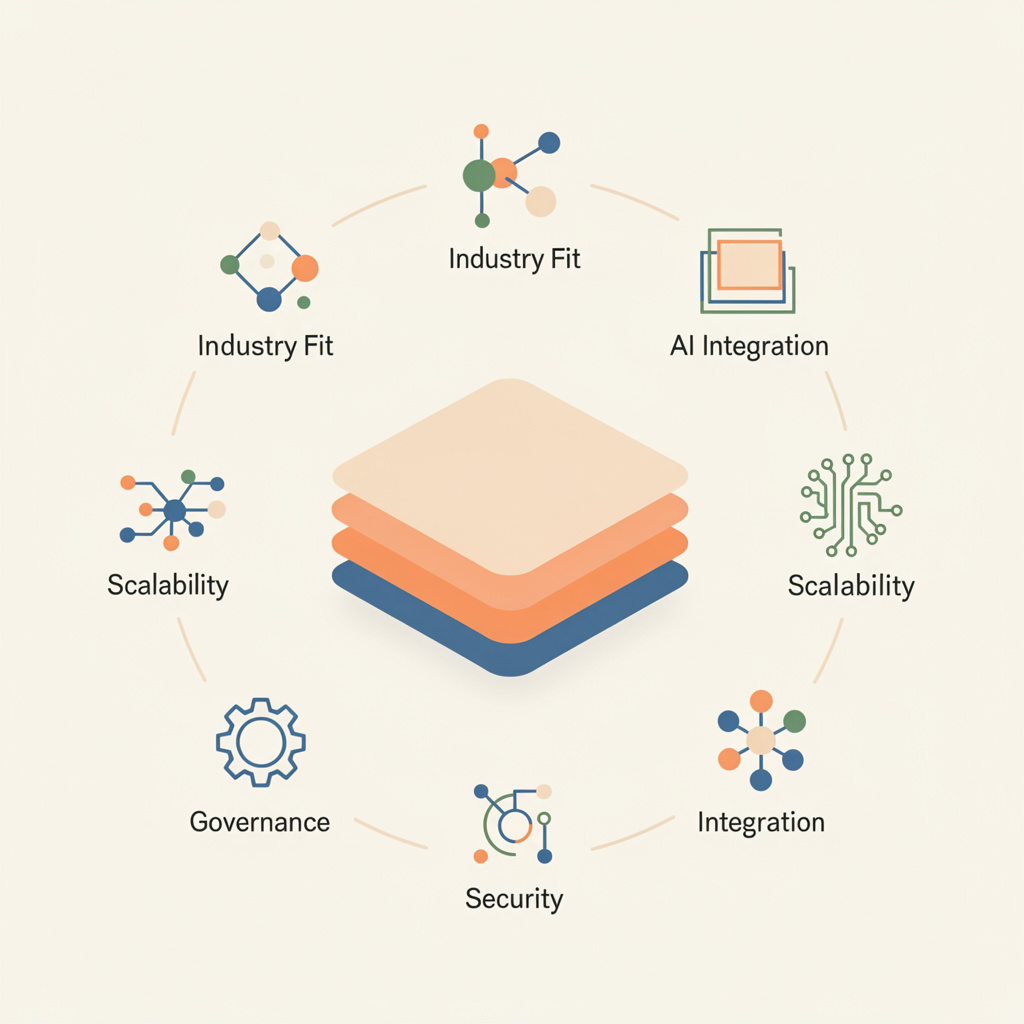
A key factor in platform selection is the question of adaptability to specific industries and company sizes. Not every solution is equally suited to all use cases. The ability to involve citizen developers — employees without classical programming skills — significantly expands the potential and promotes cross-departmental collaboration. Integration capabilities also play a central role: seamless connection to existing software ecosystems and the use of APIs are indispensable for interoperability and efficient data exchange.
What does this mean?
- Check usability: An intuitive interface and a short learning curve are essential so that development teams can work productively quickly and the platform is genuinely accepted.
- Ensure scalability: The chosen solution must be able to grow with the company while simultaneously meeting strict security and compliance requirements for business-critical applications.
- Evaluate governance mechanisms: Clear control structures and monitoring functions are necessary to prevent uncontrolled sprawl and guarantee the quality of developed applications.
- Consider monitoring capabilities: Comprehensive options for monitoring and analyzing applications improve efficiency and enable fast troubleshooting during ongoing operations.
- Take a strategic perspective: The platform choice should not only address current needs but also consider future developments such as AI integration and advanced automation.
Sources
7 Questions That Lead to the Right Low-Code Platform (Computerwoche)
Selection Criteria for Low-Code Platforms (Cloud Computing Insider)
How to Find the Right Low-Code Platform (Computerwoche)
What is Low-Code? (ServiceNow)
This article was created with AI and is based on the cited sources and the language model’s training data.
Further Reading: Self-Hosting n8n on Synology NAS – Step-by-Step Guide